

Website Design for Mental Health Professionals – 10 best Examples


Website design for mental health professionals matters more than ever
According to a Pew Research Center research, 80% of internet users in the United States have searched for health-related topics, with 21% particularly looking for material on mental health, stress and concern.
The global mental health industry is expected to total $460.6 billion by 2026.
Despite the constantly increasing need, many mental health and allied health providers continue to struggle to establish and maintain a strong online presence.
Most rely only on social media, assuming it is enough. In reality, it’s not enough; your website is the apex of your online visibility
Mental health is not just a healthcare concern, but a major societal and commercial market. That’s why we have compiled this major guide in which you will learn
- Why mental health professionals need a website
- Why websites matter for allied health professionals
- Key features of a mental health website
- Top 10 best mental health websites for design inspiration
- Benefits of having a mental health website
- How to choose the right website design approach
Let’s dive in.
Why do Mental Health Professionals Need a Website?
The current generation consumes more online content than ever, and this consumption, to some extent, affects their mental well-being. That’s why more people are searching online for mental health professionals, and your website is the first place to interact with you fully.
Now, if you’re wondering why a website matters for your practice, consider this
A single, well-designed or custom-built site acts as
- Your education hub and blog
- A 24/7 salesperson
- A communication and appointment source
- A trust-building platform for new and existing clients
Explore best healthcare website design ideas
Key reasons a website is essential for mental health professionals
- Accessibility & Guidance: People, especially Gen Z, search online for mental health support. A website makes you accessible and a helpful website increases bookings.
- Trust and Credibility: Your website quickly increases your credibility by presenting your credentials, therapeutic approach and client resources.
- Service Hub: All counseling services, treatment types, telemedicine options and resources are combined in a single place.
- Lead Generation: Clients favor website bookings, boosting conversions significantly.
- Local Visibility: Optimized website boosts local search ranking and repeat customer visits
Read: 12 Best Websites for Therapists Including Key Features
But now the concern is, just having a landing page or just a website does not get all the fruits in your bucket. You need to design to engage and make navigation easy for customers seeking help to feel safe and easy.
Get custom website design service for mental health professionals
Why Website Design Matters for Mental Health Professionals?
Website design has a significant impact on how mental health professionals are considered online.
Better website design for mental health professionals gives them an edge in engaging more online clients, builds trust, and generates more business
Hear Steven Laff and Christie Condon explain why website layout, usability and visual design matter when guiding patients toward an appointment.
Watch Full Podcast Here: Youtube
Read: Best Practices for Website Design – UX, Speed & Accessibility
A well-designed website does more than just display services; it has a direct impact on whether a person feels confident enough to seek assistance.
A strong website design is important because:
- Shapes first impressions in a sensitive field: users make your image in the first 3 seconds
- Helps reduce anxiety and uncertainty: makes users feel more supported when they’re experiencing emotional distress.
- Communicates credibility and expertise: design builds it by depicting your experience and testimonials.
- Improves accessibility and inclusivity: Easy-to-navigate design generates more leads than disorganized websites
- Differentiates you in a competitive market; calming website design reflects your personality and builds your strong impression in your audience’s mind.
Pro Tip
Design your allied health website that guides the visitor through the journey
understanding symptoms → exploring services → trusting the provider → booking a session.
Top 10 Website Designs For Mental Health Professionals
These are the top mental health website examples
- Talkspace
- BetterHelp
- Calmerry
- TherapyDen
- Mind UK
- Mindpath Health
- SonderMind
- Headspace Health
- Alma
- Thriveworks
1. Talkspace
Talkspace is a masterclass in welcoming online therapy design. The site immediately puts visitors at ease with soft visuals and clear, friendly language.

Why it stands out
- The layout is clean and distraction-free.
- Step-by-step introduction to therapy services.
- Testimonials and safe access are examples of trust components that are prominently demonstrated.
2. BetterHelp
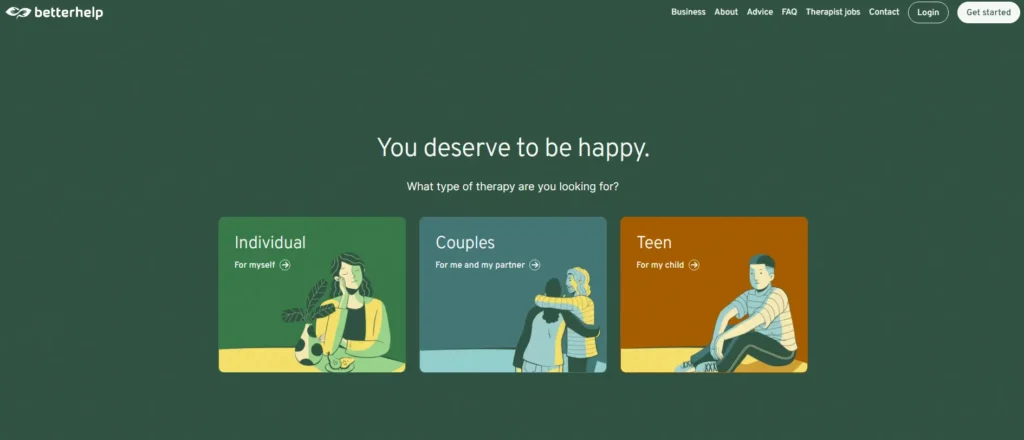
BetterHelp feels like a friendly hand reaching out online. Its approachable design emphasizes accessibility and warmth, perfect for anyone hesitant about therapy.
Why it stands out
- Inviting color palette and warm imagery
- Navigation that makes starting therapy easy
- Mobile-first experience ensures accessibility anywhere
3. Calmerry
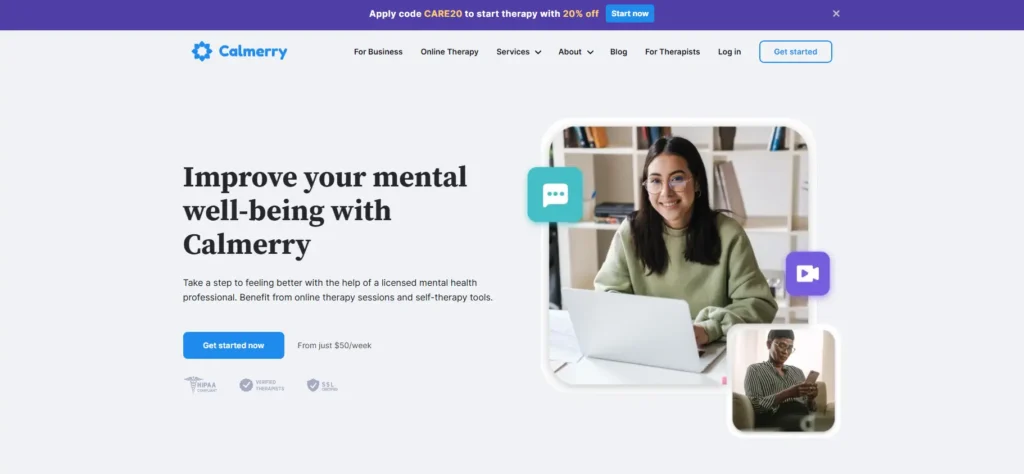
Calmerry is perfect for clients looking for clarity and assurance since it combines professional esthetics with emotional ease. It lives up to its name with a serene, comforting website design.
Why it stands out
- Gentle colors and calming visuals
- Clear descriptions of services and prices
- Easy-to-use navigation
4. TherapyDen
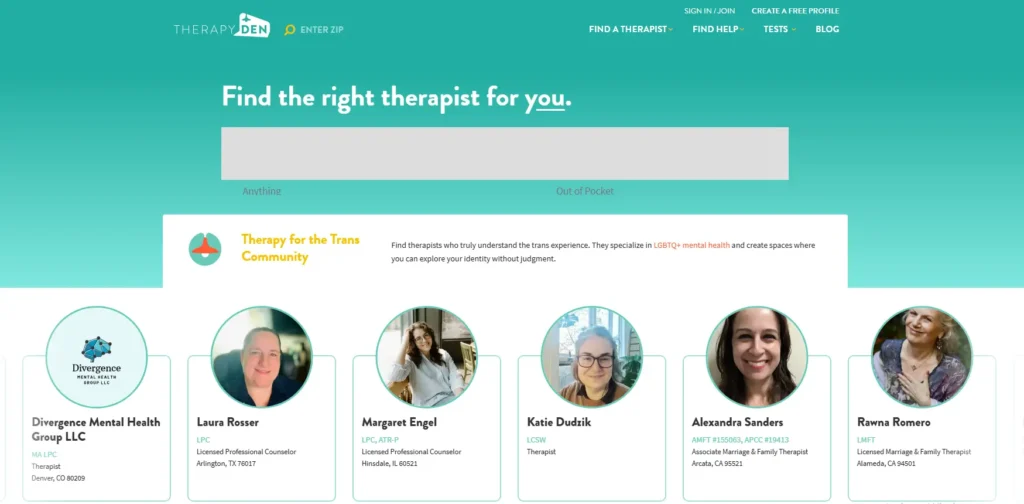
TherapyDen goes beyond aesthetics by emphasizing diversity and inclusion. The site feels like a community space for clients to find the therapist who truly fits them.
Why it stands out
- Inclusive language and imagery
- Highly searchable therapist directory
- Clear structure with meaningful resources
5. Mind UK
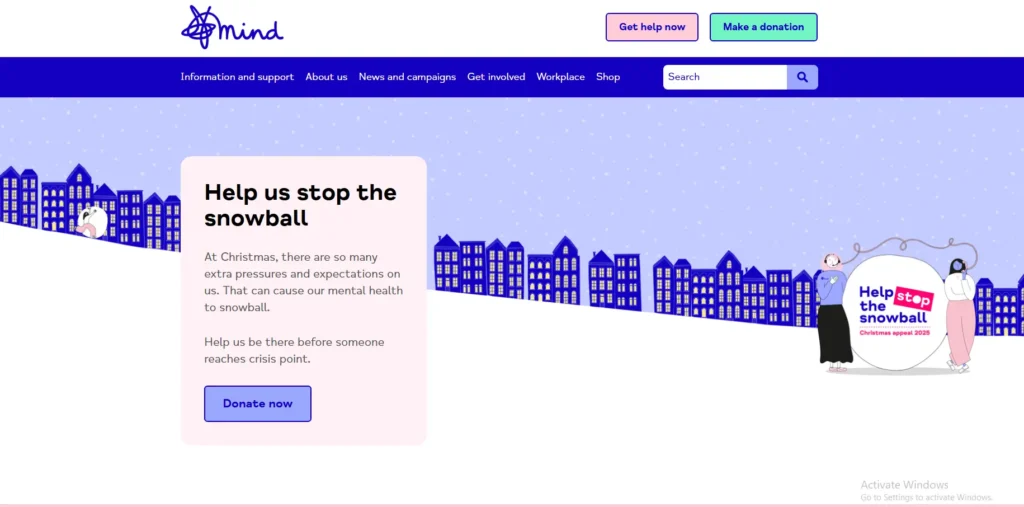
Mind UK’s website combines mental health education with a supportive design that feels credible and community-focused. The website design is balancing rich mental health resources with a clean, readable design.
Why it stands out
- Information-rich yet simple layout
- Structured pages that make information easy to digest
- Intent-based content and resources that build credibility instantly
6. Mindpath Health
Mindpath Health offers a polished, clinical yet approachable design that appeals to individuals seeking professional care. The website has the right design, perfectly blending color psychology, layouts that relax the freaked-out minds.
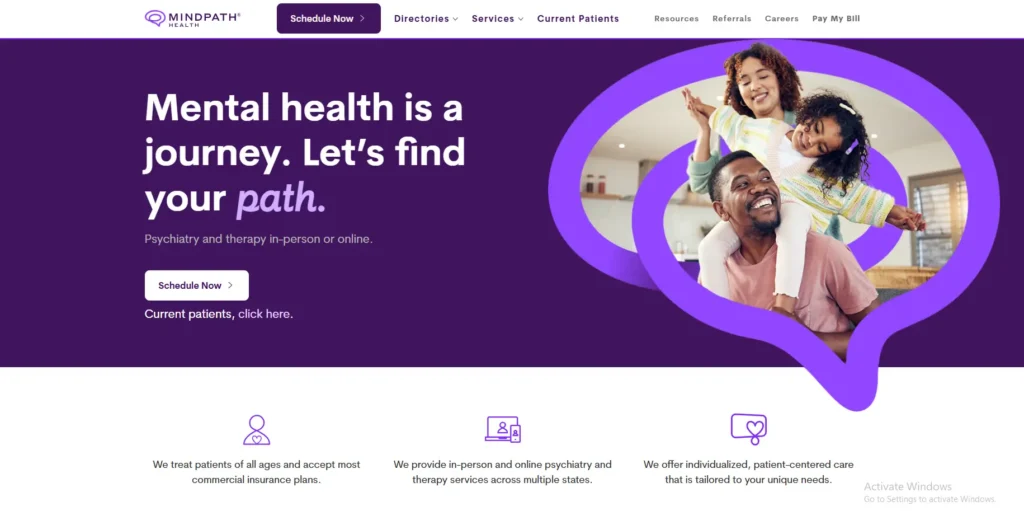
Why it stands out
- Professional medical branding
- Clear “Find a Provider” flow with sleek design paired with comforting colors
- Good utilization of testimonials and success stories.
7. SonderMind
SonderMind’s website is fast and welcoming, leading users easily from curiosity to booking a session. The basic design makes it easy for unstable people to get through quickly.
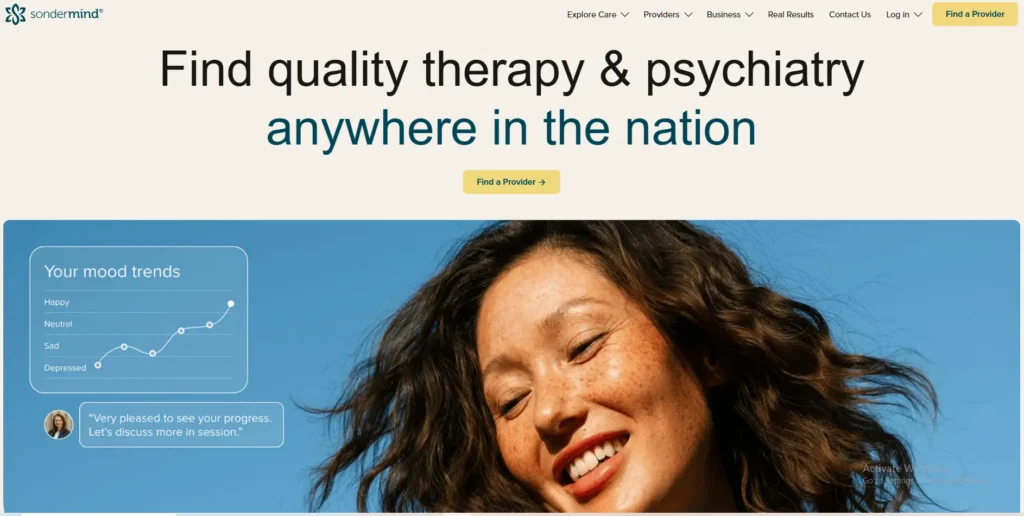
Why it stands out
- Direct, action-oriented homepage
- Straightforward calls to action for quick appointments
- Clear messaging that inspires confidence
8. Headspace Health
Headspace Health balances playfulness with credibility, making mental health resources feel both inviting and trustworthy.
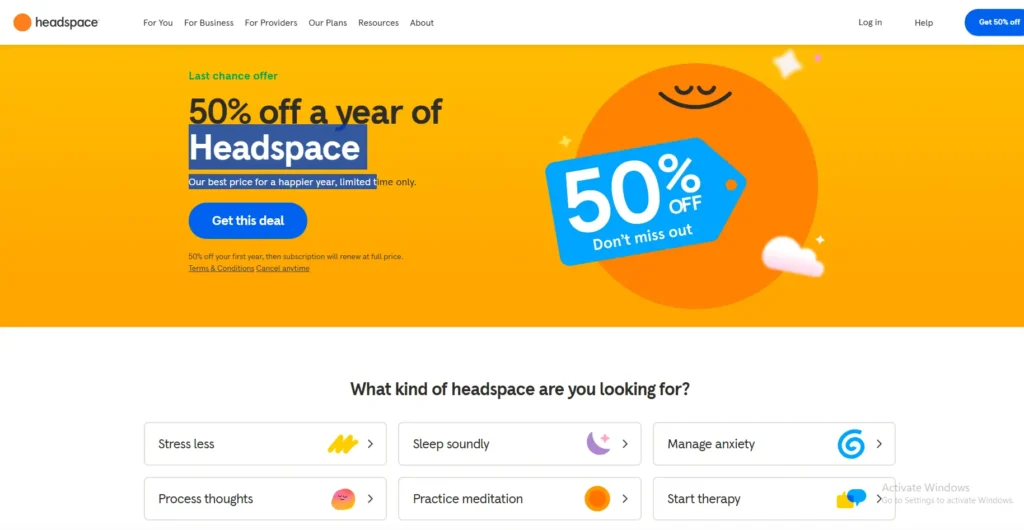
Why it stands out
- Friendly, uplifting illustrations
- Intuitive layout focused on user engagement
- Clear separation of wellness and clinical offerings
9. Alma
Alma’s online leads with elegance and trust, supporting both therapists and clients with a premium, polished look. The website is like stepping into a well-curated therapy space online.

Why it stands out
- Professional, calm, and thoughtfully designed
- Strong therapist-focused resources
- Clear communication of services and membership benefits
10. Thriveworks
Thriveworks nails ease and professionalism, giving clients a clear path to book therapy while maintaining trust and credibility.
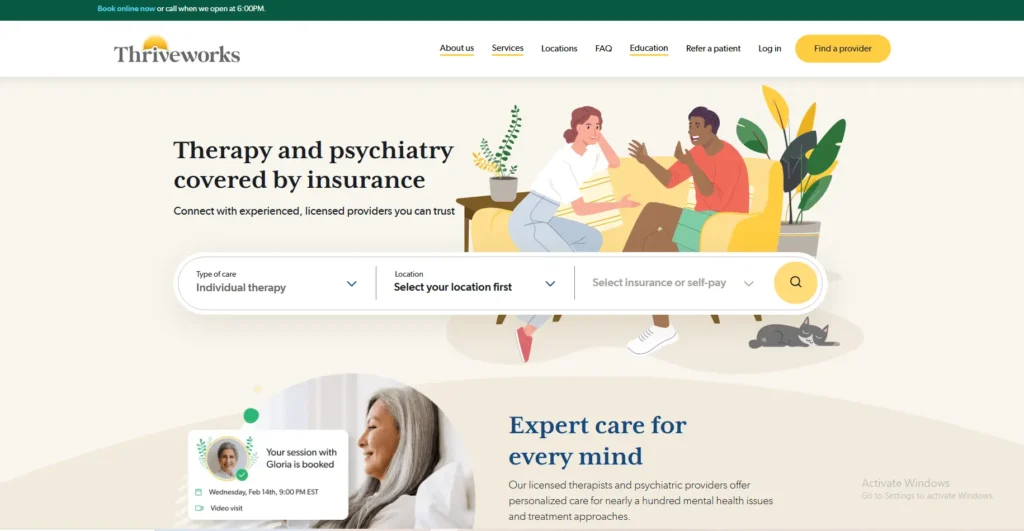
Why it stands out
- Simple, organized structure
- Prominent “Book Now” navigation
- Local office pages optimized for visibility
Key Features of the Mental Health website
Visitors to therapy websites seek clarity, reassurance and safety; the site should create a relaxing atmosphere first.
That’s why an allied health professional website must have these HIPAA-compliant website features in common
- Clear navigation
- Calming color palette (soft blues, greens, neutrals)
- Online appointment scheduling
- Solution-focused or relaxing images
- Reviews are a trust-building KPI and game-changer.
- Clear, consistent CTAs
- Secure Inquiry and session form
- Client-centered educational blog content
Explore the best therapy website template
How to Design a Mental Health Website
When creating a website for a counseling business, you want to create a secure, professional environment in which people want to communicate and get in touch.
This is a step-by-step process to create your own mental health website.
- Plan Your Website Structure
Create essential pages, guide users from information to booking, and place a clear CTA on every page.
- Choose Platform
Use WordPress, as it is the best therapist website builder
- Use a Professional, Calming Design
Create a safe, welcome environment by using soothing color palettes, organized layouts and warm high-quality images.
- Build Trust and Credibility
Show your credentials, share real testimonials, and clearly explain your evidence-based approach.
- Enhance Accessibility & Usability
Make your site mobile-friendly with readable fonts, good contrast and simple navigation.
- Enable Online Services & Engagement
Include online booking, useful information and easy contact options such as forms or chat.
- Optimize for Search (SEO)
Target local keywords, publish useful blog content, and keep your website fast-loading.
- Ensure Security & Privacy
Secure your site with SSL, display a privacy policy, and follow HIPAA or local compliance rules.
Book your session for therapy website design services
Here is the detailed comparison for custom built and DIY website for health care professionals
| Feature | DIY Website | Custom-Built Website |
|---|---|---|
| Cost | Low upfront ($0–$500/year) | Higher upfront ($2,000–$10,000+) |
| Time to Launch | Fast (1–2 weeks) | Longer (4–12 weeks) |
| Design & Branding | Template-based, limited customization | Fully flexible, matches brand identity |
| User Experience | Basic navigation, limited client flow | Optimized client journey (info → trust → booking) |
| Scalability | Hard to add advanced features | Easily scalable with integrations |
| SEO & Performance | Basic tools, may be slow | Fully optimized, fast, mobile-friendly |
| Security & Compliance | Limited; HIPAA compliance difficult | Can be HIPAA-compliant and secure |
| Maintenance & Support | Self-managed; limited support | Professional support and updates |
| Integrations | Limited (plugins) | Seamless booking, teletherapy, CRM |
| Credibility | Generic feel | Unique design builds trust and professionalism |
Conclusion
Wrapping up, above is the complete guide on website design for mental health professionals.
The most successful mental health websites are not just visually appealing. They guide, reassure and empower people by combining soothing esthetics with clear usability, trust signals and therapy methods.
We can help
- Custom-built mental health practice website
- DIY therapist website design for under-budget professionals
- Website maintenance for ongoing support.
Get in touch with us! Book your free consultation.
FAQs
What are the must-have features for mental health websites?
Clean design, clear navigation, therapist information, secure booking, privacy statements, accessibility, mobile responsiveness, client-centered content, and SEO optimization.
How can copywriting enhance a mental health website?
Through empathetic tone, clear explanations, and reassuring language that makes visitors feel understood and supported.
Should I build my website myself or hire a professional?
DIY works for simple websites. For a polished, secure, scalable site, hiring a professional is usually the better choice.
How can a mental health website improve client engagement?
By offering clear information, building trust, showcasing expertise, simplifying booking, and providing helpful content that supports clients before they reach out.

Popular Guides
View All Guides