

Website Optimization Guide: Maintenance, Performance & Growth


Launching a website is an important milestone, but it is not the end of the process. In reality, the most successful websites continue improving long after launch.
Over time, websites need ongoing optimization, technical maintenance, performance improvements, and content refinement to remain effective.
Many websites gradually lose visibility, speed, and usability because maintenance and optimization are treated as occasional tasks instead of continuous processes.
Website optimization helps businesses improve performance, strengthen user experience, maintain technical stability, and support long-term growth.
This guide explains how website optimization and maintenance work together, why ongoing improvements matter, and how businesses can maintain a high-performing website over time.
What Website Optimization Really Means
Website optimization is the process of improving a website’s performance, usability, visibility, and effectiveness over time.
This may include:
- Improving website speed
- Refining user experience
- Updating content
- Maintaining technical health
- Strengthening SEO
- Improving website conversion & performance
Optimization is not about redesigning a website constantly. It is about making structured improvements based on real data, user behaviour, and evolving business goals.
Over time, these improvements compound and help the website perform more effectively.
Why Website Maintenance Matters
Website maintenance protects the long-term health and stability of a website.
Without maintenance, websites become vulnerable to:
- Security issues
- Plugin conflicts
- Broken functionality
- Slow performance
- Outdated content
- Compatibility problems
Regular website maintenance ensures the website remains secure, stable, and functional as technologies evolve.
For businesses that rely on their website as a growth tool, maintenance is not optional. It is part of protecting the long-term value of the website.
Website Performance Optimization
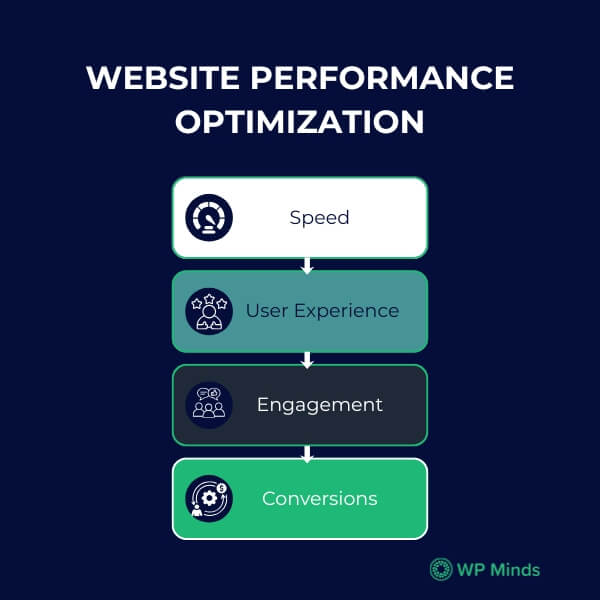
Website performance optimization focuses on improving how quickly and efficiently a website loads and functions.
Performance affects:
- User experience
- Search visibility
- Conversions
- Mobile usability
Slow websites often create frustration and increase bounce rates.
Website performance optimization may include:
- Image optimization
- Caching improvements
- Script optimization
- Hosting improvements
- Database cleanup
- Core Web Vitals improvements
Even small performance improvements can significantly improve the overall website experience.
Website Optimization and Maintenance Work Together
Website optimization and maintenance are closely connected.
Maintenance keeps the website stable and secure.
Optimization improves how effectively the website performs.
Together, they help businesses:
- Maintain technical reliability
- Improve user experience
- Support SEO visibility
- Strengthen conversion performance
- Adapt to changing business goals
Websites that receive consistent attention usually outperform websites that remain unchanged for long periods.
Website Maintenance Checklist
A structured website maintenance checklist helps ensure critical tasks are completed consistently.
Technical Maintenance
- Update WordPress core and plugins
- Monitor website uptime
- Maintain regular backups
- Check security vulnerabilities
- Review broken links
Performance Optimization
- Improve page speed
- Compress large images
- Monitor Core Web Vitals
- Review hosting performance
SEO & Content Optimization
- Update outdated content
- Improve internal linking
- Review page indexing
- Optimize metadata
User Experience Improvements
- Test mobile usability
- Review calls-to-action
- Improve readability
- Analyse user behaviour
A consistent maintenance process helps prevent small issues from becoming larger problems over time.
Common Website Optimization Mistakes
Many businesses unintentionally reduce website performance by neglecting ongoing optimization.
Common mistakes include:
- Ignoring website updates
- Publishing content without optimization
- Failing to monitor performance
- Allowing outdated pages to accumulate
- Neglecting mobile usability
- Focusing only on redesigns instead of improvements
Small improvements applied consistently usually outperform infrequent large redesigns.
Website Optimization Supports Long-Term Growth
Websites should evolve alongside the business.
As goals change, user expectations shift, and search engines evolve, websites benefit from regular refinement.
Long-term website optimization helps businesses:
- Improve traffic quality
- Strengthen user trust
- Increase conversions
- Maintain technical stability
- Improve search visibility over time
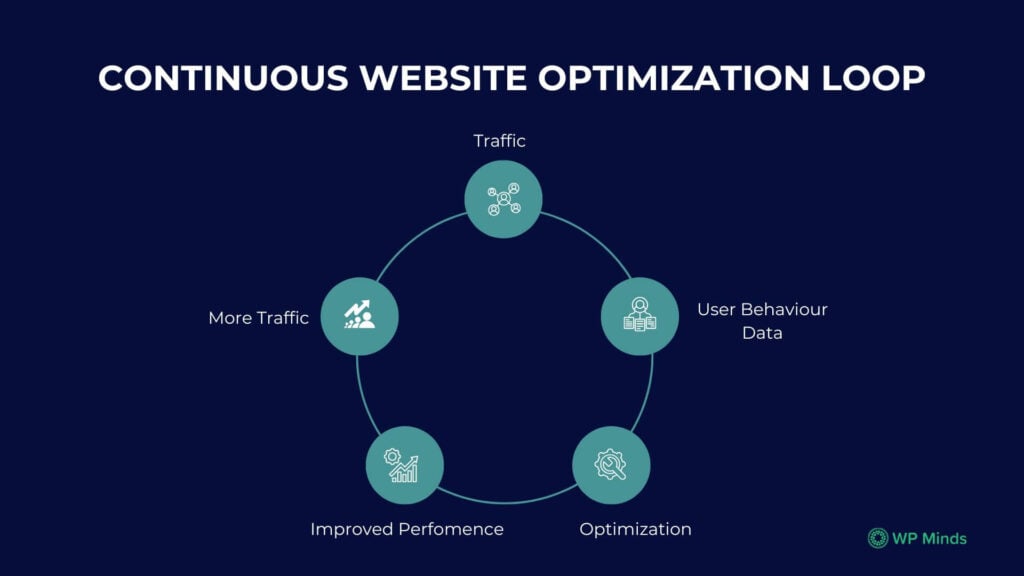
Optimization transforms a website from a static asset into an evolving growth system.
How Website Optimization Completes the Website Growth Framework
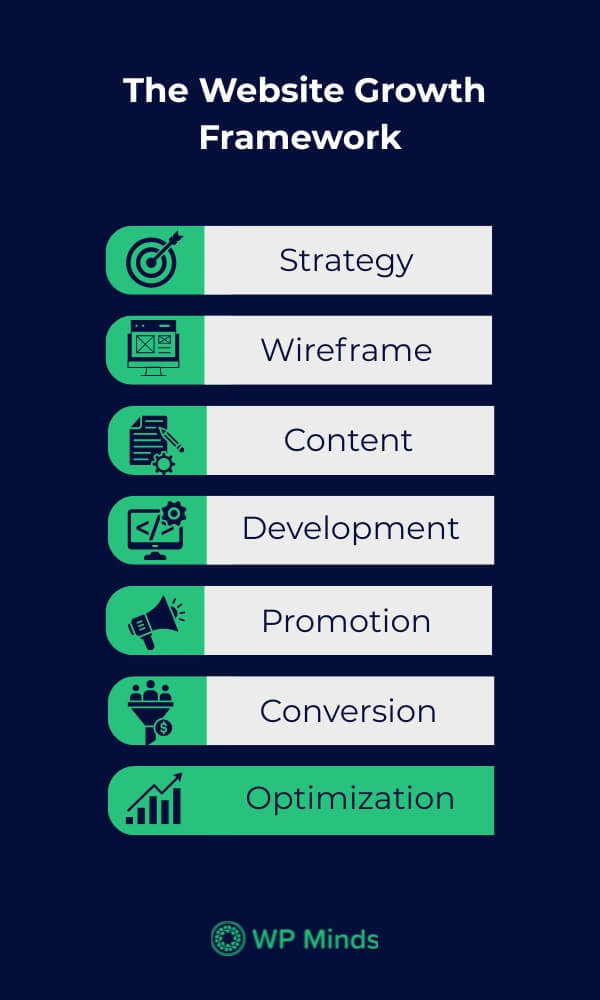
Website optimization is the final stage of the Website Growth Framework.
Earlier stages focus on:
- Strategy
- Structure
- Content
- Development
- Promotion
- Conversion
Optimization ensures those efforts continue improving over time rather than becoming outdated after launch.
Instead of treating websites as finished projects, the framework encourages continuous improvement based on performance, usability, and growth opportunities.
Final Thought
A successful website is not defined by its launch date. It is defined by how effectively it continues improving over time.
Website optimization and maintenance help businesses protect performance, improve usability, strengthen visibility, and support long-term growth.
When websites are maintained and optimized consistently, they become significantly more valuable as business assets.
FAQS
What is website optimization?
Website optimization is the process of improving website performance, usability, SEO, and conversions over time.
Why is website maintenance important?
Website maintenance helps keep websites secure, stable, compatible, and functioning properly as technologies evolve.
What is included in a website maintenance checklist?
A website maintenance checklist often includes updates, backups, security monitoring, performance improvements, SEO reviews, and usability testing.
How often should website optimization be performed?
Most websites benefit from ongoing monthly optimization and regular performance reviews.

Popular Guides
View All Guides