
Website Strategy: How to Plan a Website That Supports Business Growth


A successful website is rarely the result of good design alone. It is the result of a solid website strategy along with clear strategic decisions made before any design or development begins.
In our experience, most websites underperform not because of poor execution, but because critical questions were never answered early enough. Teams often jump straight into pages, layouts, and features, only to realise later that the website does not support real business goals.
Founder and investor Graham Weaver once said, “The truest form of intelligence is designing the life you want to live.” The same principle applies to your business and your website design. Without intention and clarity, outcomes are left to chance.
This guide explains what website strategy really means, why it comes first, and how to create a clear plan before moving into structure, content, and execution. It is written for purpose driven businesses that want to turn their website into their #1 business growth tool, not just a digital presence.
What Website Strategy Really Means
Website strategy is often misunderstood. It is not visual design, branding, or technology selection. It is also not a list of pages or a collection of best practices.
At its core, website strategy is about decision making.
It means being clear on:
- Why the website exists
- Who it is for
- What success looks like
- How the website supports broader business goals
In our experience, after working on hundreds of website projects, problems rarely start during website design or development.
They start much earlier, when these fundamental questions are unclear. Without that clarity, decisions become reactive, design choices are driven by opinion, content loses focus, and development work becomes more complex than it needs to be.
A strong website strategy creates alignment before execution begins. It gives teams a shared reference point, so decisions are made consistently, and the website moves in one clear direction rather than pulling in multiple competing ones.
Why Website Strategy Comes First
Website projects often fail long before development begins.
In practice, this usually shows up as:
- Designing pages before goals are defined
- Writing content without understanding user intent
- Building features that do not support conversions
- Treating SEO as something to “add on” after the site is already structured
These missteps rarely feel serious at the start, but they compound quickly. Teams end up revisiting decisions, rebuilding sections of the site, and extending timelines, all of which increase cost and complexity.
Website strategy exists to prevent this. By clarifying goals, audiences, and priorities early, strategy reduces uncertainty and creates a stable foundation for everything that follows.
As productivity expert Brian Tracy puts it, “Every minute spent planning saves ten minutes in execution.” In website projects, that time saved often determines whether a project stays focused or spirals into rework.
Defining the Purpose of Your Website
Every website should have a clearly defined purpose. Without one, it becomes difficult to decide what website content to include, how pages should be structured, or how success should be measured.
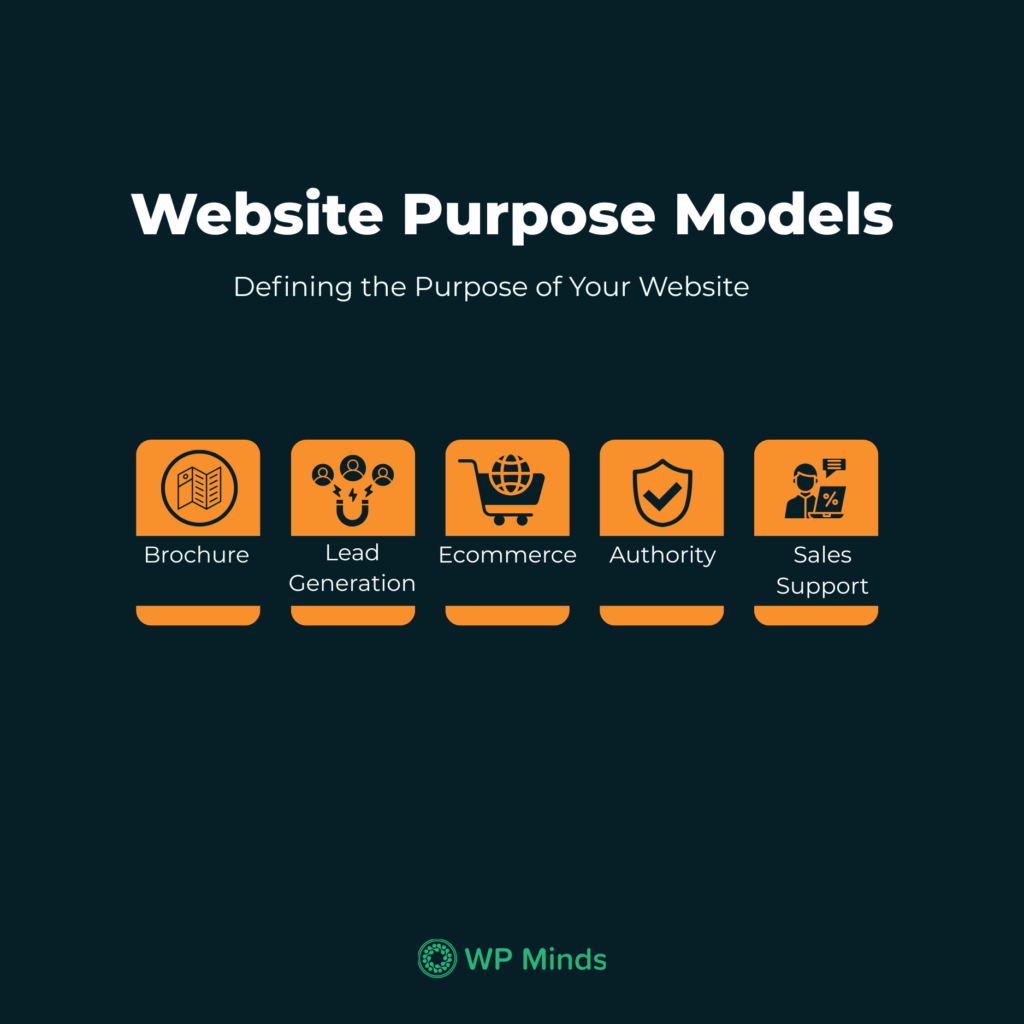
In practice, most business websites are built to serve one primary role:
- A brochure website that establishes presence and credibility
- A lead generation site designed to capture enquiries
- An ecommerce site focused on direct sales
- An authority site built to build trust and expertise
- A support platform for an existing sales or marketing process
Some websites can support more than one objective, but one goal should always take priority. When everything is treated as equally important, nothing is clear to the user.
Defining purpose also means deciding what the website should not try to do. Trying to serve every audience or objective usually results in a site that feels unfocused and ineffective.
When the purpose is clear, later decisions become easier. Page structure, content priorities, user journeys, and conversion paths all start to align around a single direction instead of competing with one another.
Understanding Your Audience Before Planning Pages
A website is built for your customers, not for you.
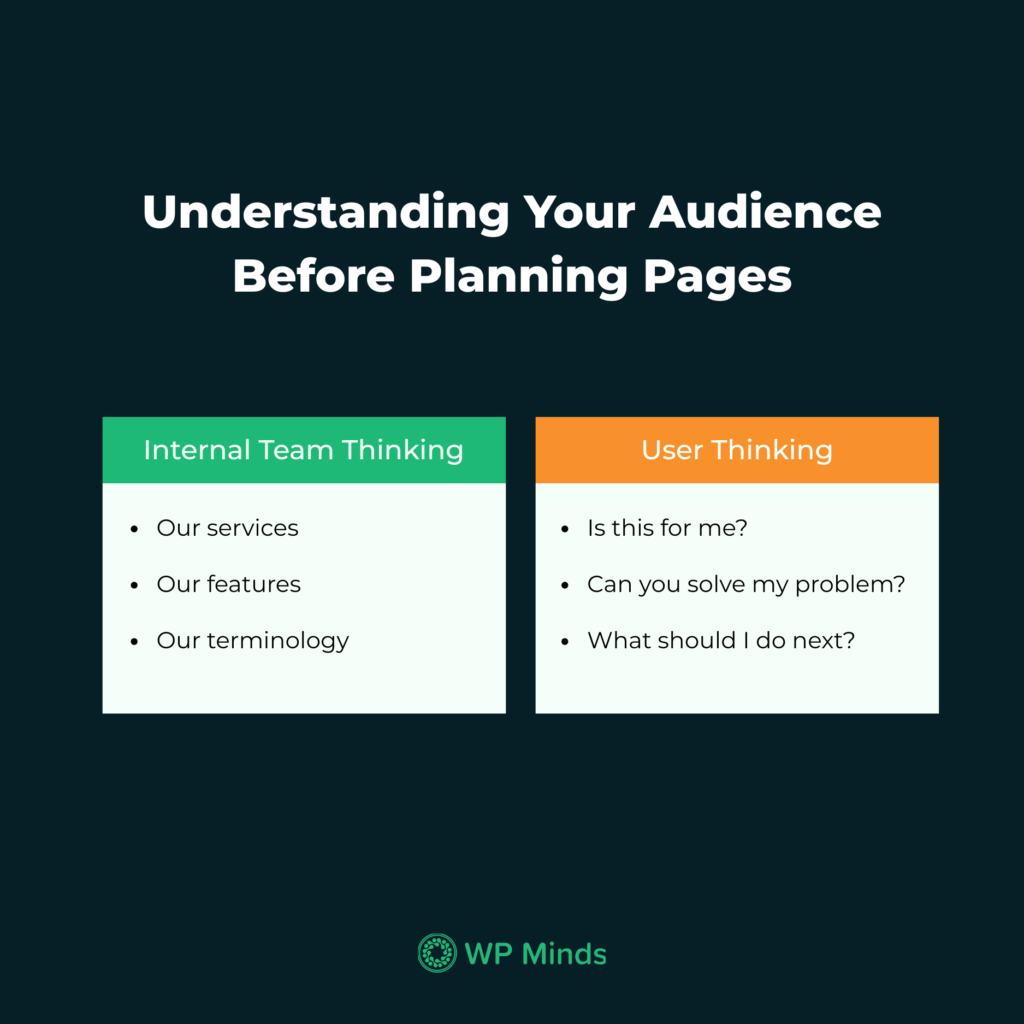
Before planning pages or content, it is essential to understand a few core things about the people the website is meant to serve:
- Who is your primary audience
- What problem are they trying to solve
- What questions do they need answered
- What concerns or objections may be holding them back
In practice, most websites fail to convert because they speak too broadly or assume users already understand the offering. When content is written from an internal perspective, it often misses the context users actually need to move forward.
At this stage, the goal is not to design layouts or write copy. It is to develop clarity around who the website is for and what those users need in order to move forward with confidence.
Setting Website Goals That Guide Decisions
Goals turn strategy into action.
Clear website goals help teams prioritise what matters and avoid unnecessary complexity. A goal should explain what the website is expected to achieve, not just what it should contain.
In practice, strong website goals are:
- Specific
- Measurable
- Aligned with real business outcomes
Weak goals, on the other hand, tend to be vague. Phrases like “increase engagement” or “look more modern” sound reasonable, but they provide no direction. Without clear goals, it becomes difficult to evaluate success or make confident design and content decisions.
Website goals influence everything that follows, including:
- Which pages are essential
- How content is structured
- Where calls to action appear
- How success is measured after launch
This is why goals must be defined before pages are planned. When goals are clear, decisions downstream become simpler, faster, and more consistent.
Strategic Decisions That Must Be Made Early
Before moving into structure or execution, several key decisions should be clearly defined.
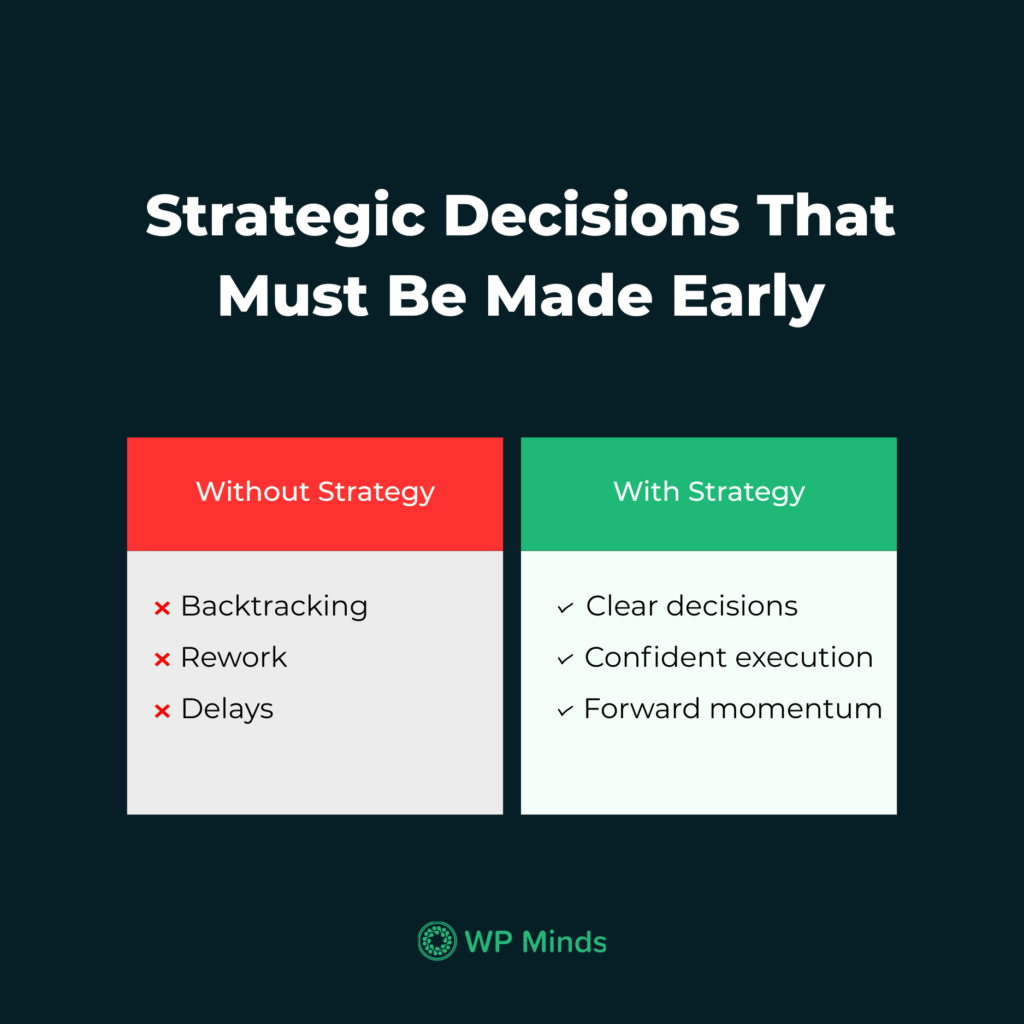
In practice, these include:
- The primary goal of the website
- The main audience it serves
- The role each core page will play
- What success looks like in practical terms
Making these decisions early prevents misalignment later. When they are left undefined, teams often find themselves revisiting foundational choices mid-project, questioning earlier assumptions, and adjusting direction after work has already begun. This is where rework, delays, and frustration tend to creep in.
Website strategy acts as a decision gate. Once these fundamentals are agreed upon, all involved in designing and developing a website can move forward with confidence, knowing that structure, content, and execution are all anchored to the same set of priorities.
How Website Strategy Connects to the Growth Framework
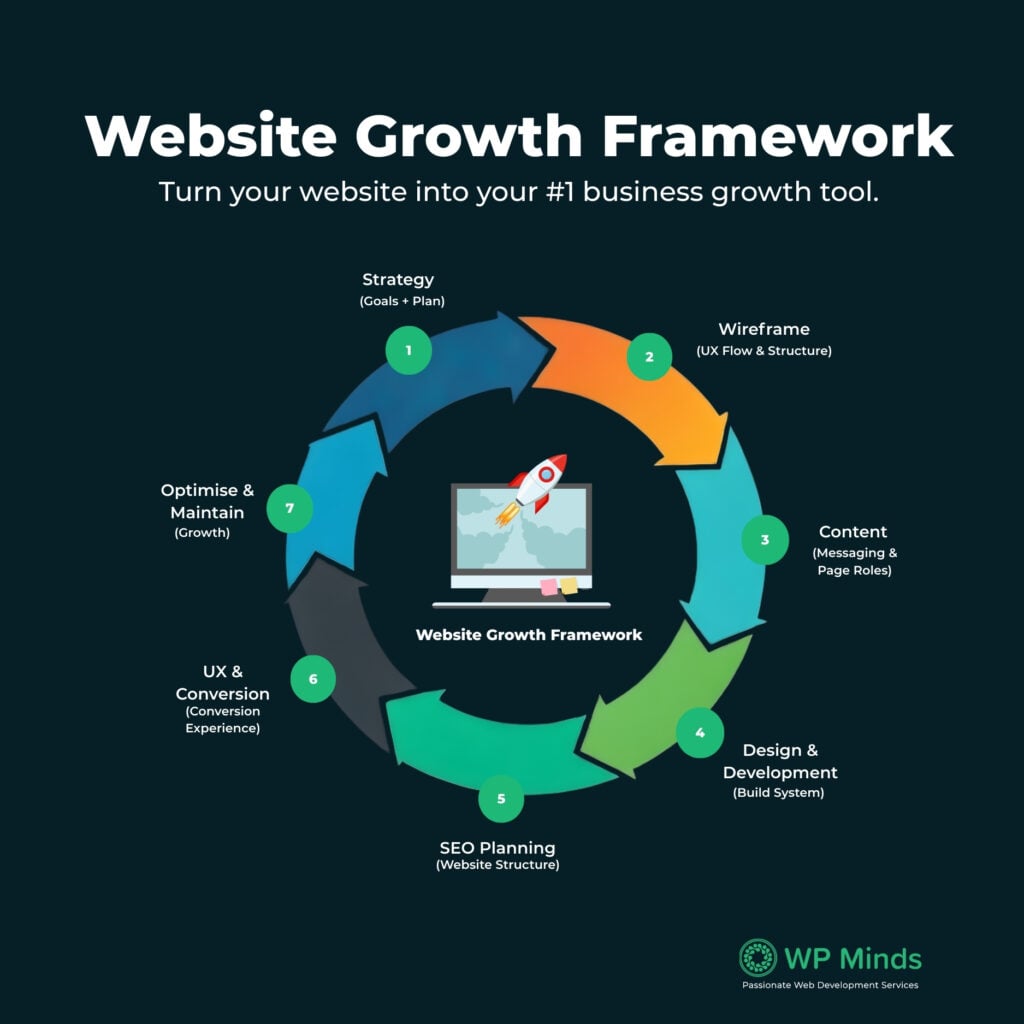
Website strategy is the first stage of the Website Growth Framework. It sets direction and creates clarity for every step that follows.
Once the strategy is defined, the work that comes next becomes far more focused:
- Website wireframe can concentrate on user flow and structure rather than guesswork
- Content can be planned around clear messaging and defined page roles
- Design and development can focus on execution instead of discovery
- SEO planning can shape site structure and hierarchy from the start
- UX and conversion work can improve outcomes over time, rather than fixing avoidable issues
- Optimization and maintenance can compound results instead of correcting foundational problems
Each stage builds on the decisions made during the strategy. When this step is skipped or rushed, the entire system becomes reactive, and later stages spend more time compensating than progressing.
When to Move Beyond Strategy
In practice, a website strategy is complete when:
- The purpose of the website is clear
- Goals are defined and agreed
- The audience is understood
- Key decisions have been documented
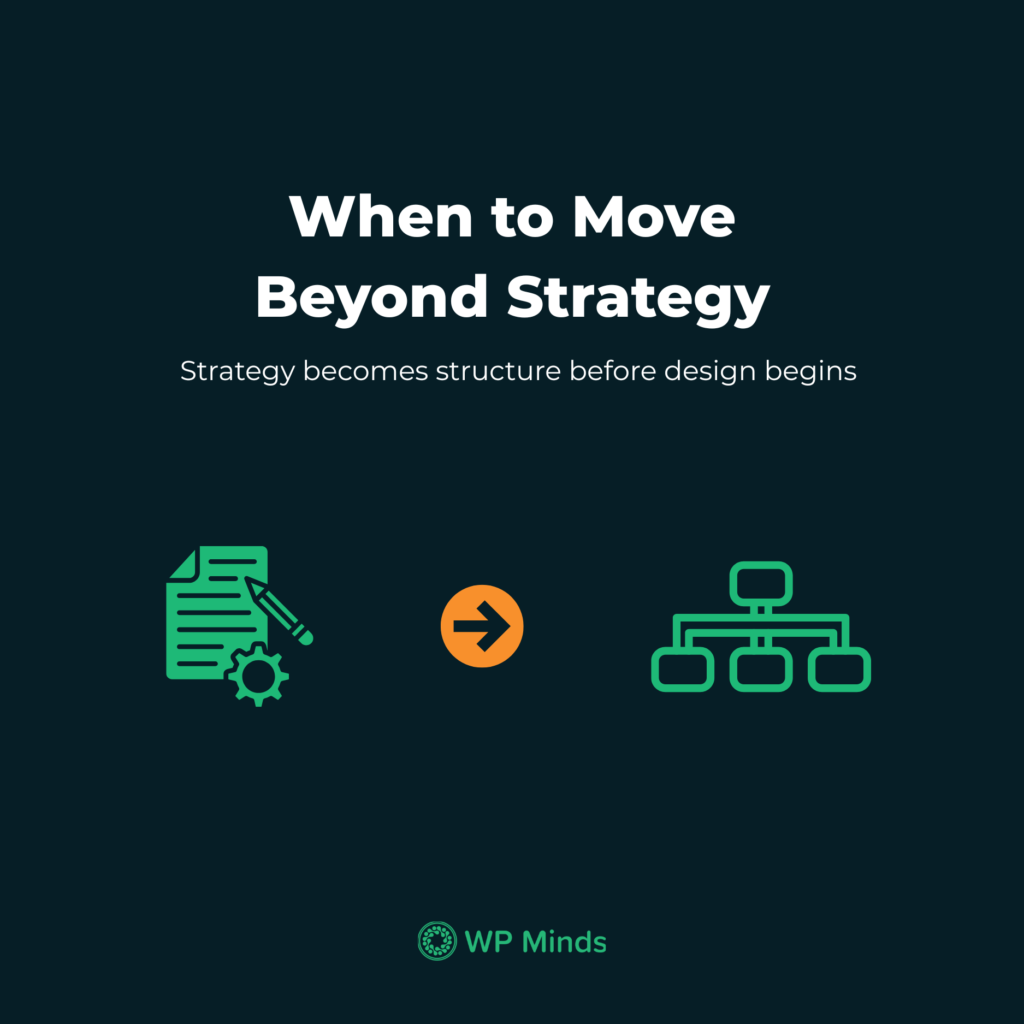
At this point, you can move confidently into planning structure and user flow. This is where wireframes and UX flow become valuable, translating strategic decisions into a clear blueprint for the site.
Moving forward without this clarity often creates friction later. Taking the time to define strategy first makes execution faster, smoother, and more effective.
Final Thought
hidden
A website without a strategy is a collection of pages. A website with a strategy becomes a growth tool.
By defining goals, audiences, and priorities early, website strategy ensures that every later decision supports meaningful outcomes. It is not an optional step or a luxury. It is the foundation that allows design, development, and optimization to work together with clarity and purpose.
Once the strategy is clear, the next step is to plan how users will move through the website and how information should be structured to support those goals. This is where strategy begins to take shape as a usable blueprint.

Popular Guides
View All Guides