

Website Conversion Guide: UX, CRO & Website Optimization


Attracting website traffic is only part of the process. A website must also guide visitors toward meaningful action.
Many websites generate traffic but struggle to convert visitors into leads, enquiries, or customers. In most cases, the issue is not traffic volume. It is friction within the user experience.
Website conversion optimization focuses on improving how users interact with a website so they can move through pages clearly, build confidence, and take the next step more easily.
This guide explains how website conversion optimization works, how user experience affects conversions, and how businesses can improve website performance through clearer structure, usability, and conversion strategy.
What Website Conversion Optimization Really Means
Website conversion optimization is the process of improving a website so a higher percentage of visitors take meaningful action.
These actions may include:
- submitting an enquiry
- booking a consultation
- requesting a quote
- purchasing a product
- joining an email list
Conversion optimization is not about manipulating users. It is about reducing confusion, improving clarity, and helping visitors move forward confidently.
In many cases, small usability improvements can significantly increase website performance over time.
Why User Experience Impacts Conversions
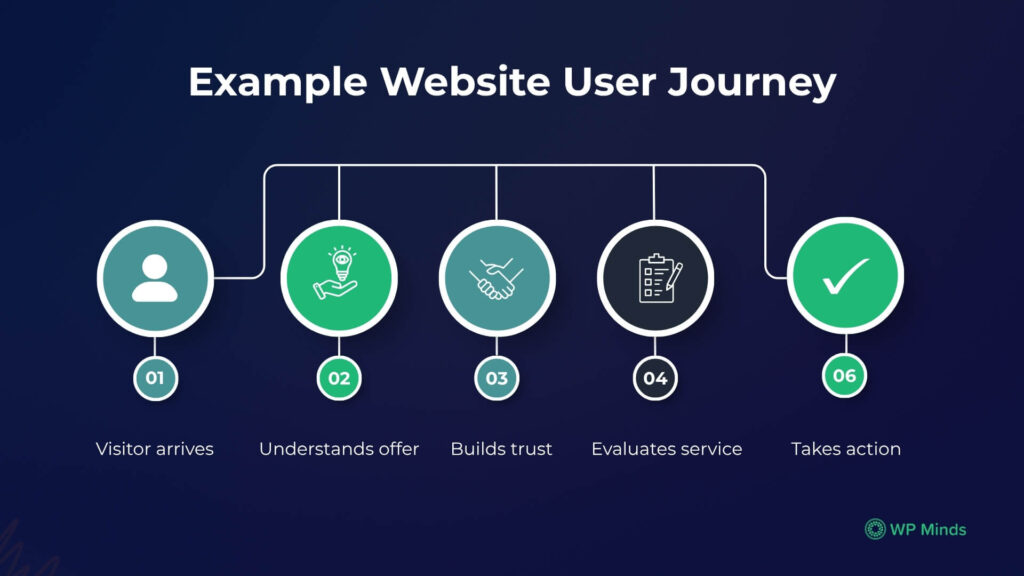
User experience plays a major role in how visitors perceive a website.
If users struggle to:
- understand the offering
- navigate pages
- trust the business
- find the next step
…they are far less likely to convert.
Website user experience optimization focuses on making interactions feel intuitive and friction-free.
Strong UX helps visitors:
- process information quickly
- navigate naturally
- build trust
- complete actions easily
When websites feel confusing or overwhelming, users often leave before converting.
Common Website Conversion Problems
Many websites struggle with conversions because important usability and messaging issues go unnoticed.
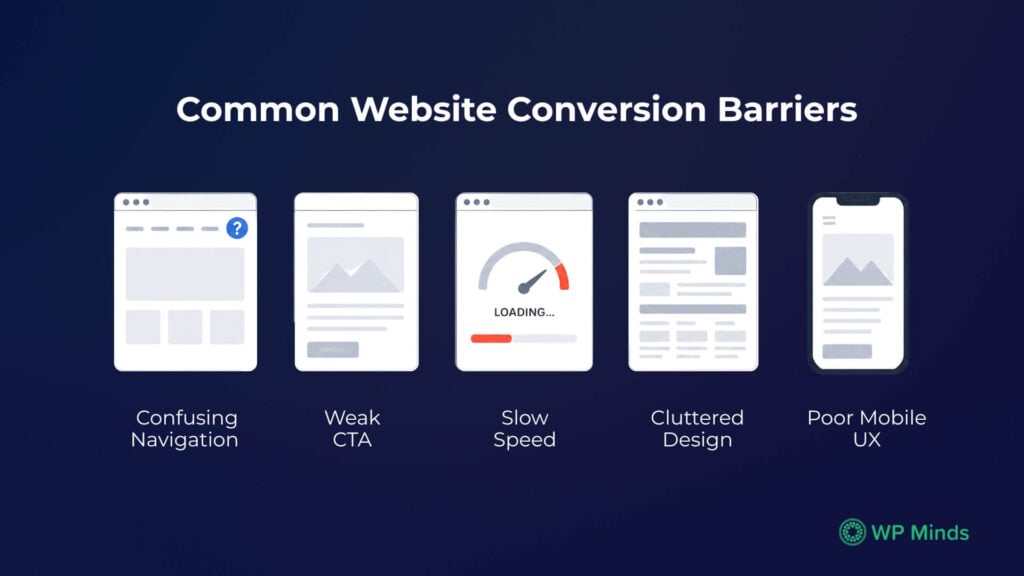
Common problems include:
- unclear calls-to-action
- confusing navigation
- weak messaging
- cluttered page layouts
- slow loading pages
- poor mobile usability
- too many competing actions
These issues create friction during the decision-making process.
Website conversion optimization aims to remove these obstacles and improve clarity throughout the user journey.
Website Conversion Strategy Starts with Clarity
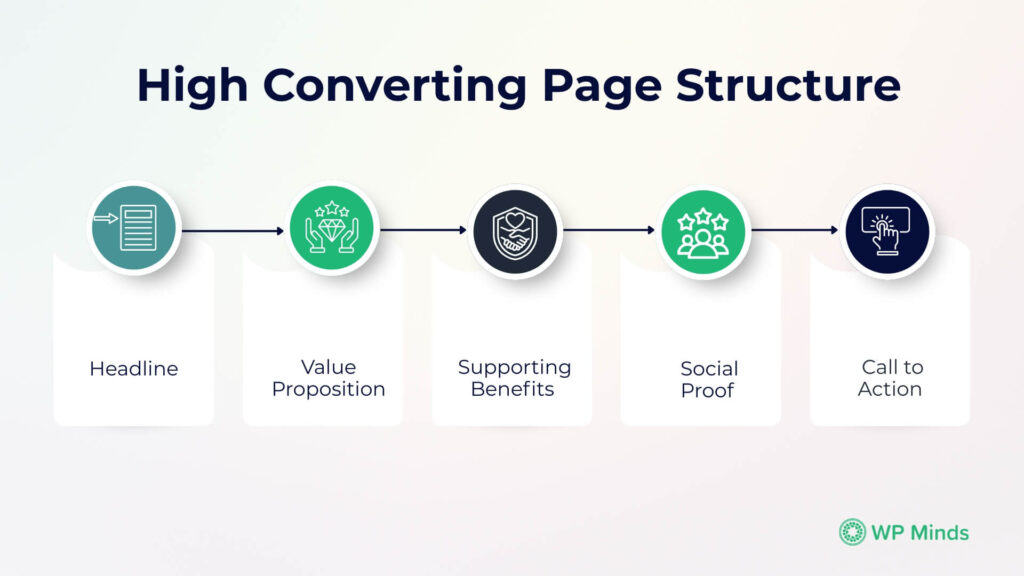
A strong website conversion strategy begins long before buttons or forms are designed.
Visitors must first understand:
- what the business offers
- who it helps
- why it matters
- what action to take next
If this foundation is unclear, conversion rates usually suffer regardless of how visually polished the website appears.
Strong conversion-focused websites guide visitors through a logical sequence:
Understand
→ trust
→ evaluate
→ act
This progression helps users feel more confident as they move through the website.
How To Optimise Your Website for Conversion
Website conversion optimization usually involves improving several areas simultaneously.
- Improve Calls-to-Action
Every important page should clearly guide visitors toward the next step.
Calls-to-action should feel visible, specific, and easy to understand.
- Simplify Navigation
Complex navigation creates unnecessary friction.
Users should be able to move through the website naturally without confusion.
- Improve Messaging Clarity
Website messaging should focus on problems, outcomes, and value rather than internal company language.
Clear messaging improves understanding and trust.
- Strengthen Trust Signals
Testimonials, reviews, case studies, and client logos help visitors feel more confident.
Trust plays a major role in conversion decisions.
- Optimize for Mobile Devices
A large percentage of users browse on mobile devices.
Websites should remain fast, readable, and easy to navigate across all screen sizes.
Conversion Rate Optimization Audit Basics
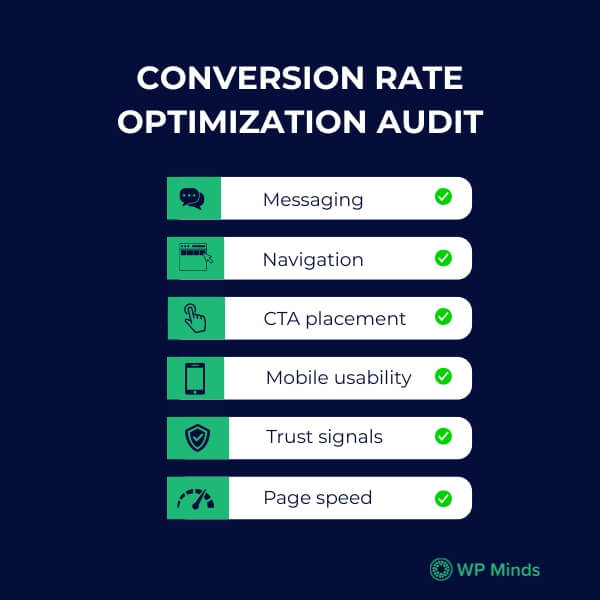
A conversion rate optimization audit helps identify where visitors experience friction.
A typical audit may review:
- website structure
- user journeys
- calls-to-action
- form usability
- page speed
- messaging clarity
- mobile responsiveness
- trust signals
These audits help businesses prioritise improvements that can produce the greatest impact.
Website Conversion Optimization Is Ongoing
Website optimization is not a one-time task completed after launch.
As businesses grow, websites often require:
- updated messaging
- improved UX flows
- stronger calls-to-action
- refined page layouts
- clearer conversion paths
Small improvements can compound over time, significantly increasing the effectiveness of the website.
Common Website Conversion Mistakes
Many websites unintentionally reduce conversions through avoidable decisions.
Common mistakes include:
- focusing only on visual design
- adding too many CTAs
- prioritising aesthetics over clarity
- ignoring mobile usability
- weak page hierarchy
- unclear service explanations
Good conversion optimization balances usability, clarity, trust, and performance.
How Website Conversion Fits the Website Growth Framework
Website conversion optimization builds on the earlier stages of the Website Growth Framework.
Before improving conversions, businesses should already have:
- clear strategy
- structured wireframes
- strong content strategy
- professional website development
- SEO and promotion foundations
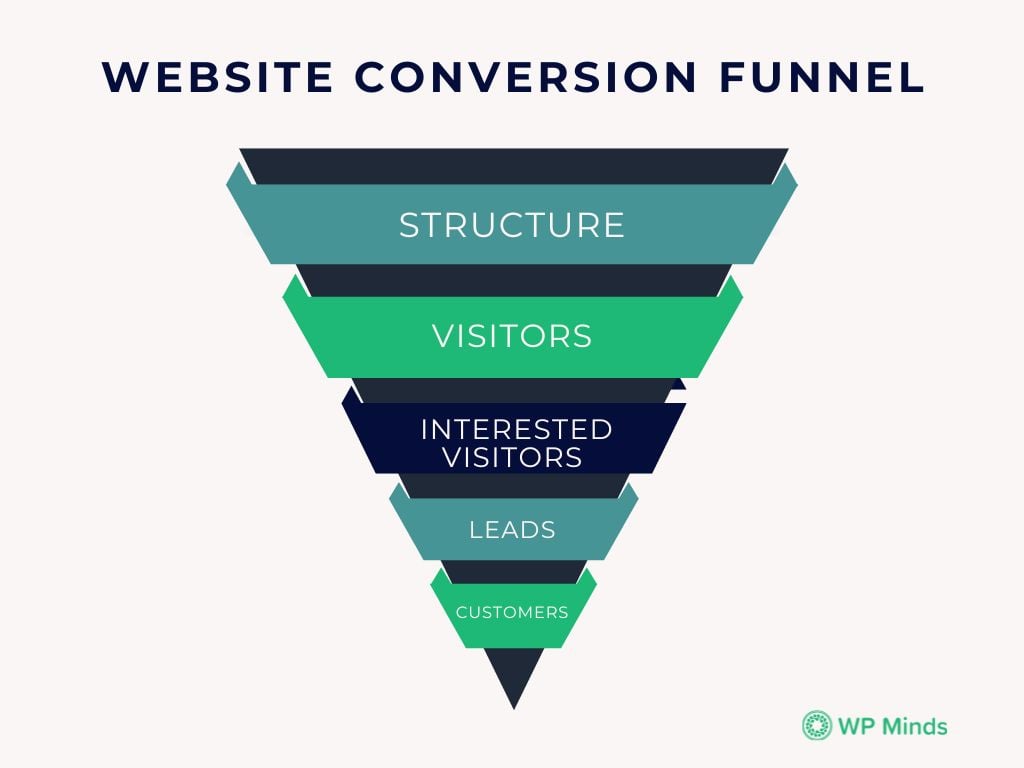
Once traffic begins reaching the website, conversion optimization helps turn visitors into enquiries, leads, and customers more effectively.
The final stage focuses on long-term optimisation and website maintenance.
Final Thought
A website that attracts traffic but fails to convert users will struggle to support meaningful business growth.
Website conversion optimization improves how users experience the website, reducing friction and helping visitors move toward action more confidently.
When usability, messaging, trust, and structure work together, websites become significantly more effective at generating real business results over time.
Frequently Asked Questions
What is website conversion optimization?
Website conversion optimization is the process of improving a website so more visitors take meaningful actions such as submitting enquiries or making purchases.
Why is user experience important for conversions?
User experience affects how easily visitors can navigate, understand, and trust a website. Poor UX often reduces conversion rates.
What is a conversion rate optimization audit?
A conversion rate optimization audit evaluates usability, messaging, calls-to-action, page structure, and technical performance to identify conversion barriers.
How do I optimise my website for conversion?
Improving clarity, simplifying navigation, strengthening calls-to-action, improving trust signals, and enhancing mobile usability are some of the most effective ways to optimise a website for conversion.

Popular Guides
View All Guides