

Conversion Rate Optimization Checklist – Best Practices


Thinking of conversion rate optimization (CRO) for your business?
Are you already running successful campaigns and driving traffic to your website? But is your traffic converting into paying customers?
If not, you need to focus on conversion rate optimization. CRO is something real businesses do to get maximum output.
In this article, we have provided a complete guide and checklist to get the most conversions out of your traffic.
Let’s dive in!
What is CRO?
CRO stands for conversion rate optimization. It’s a structured approach businesses use to get the maximum value from every visitor they attract.
Most of the businesses online generate tons of traffic, but this traffic is not getting them the desired results. You know why?
Because they ignore the key aspects that convert leads into business.
The fact, when the internet is populated with online businesses, your sites and landing pages are skimmed in nanoseconds.
So, how are you gonna convert your visitor into a customer? Simple, by following the checklist provided in this article.
11 Points CRO Checklist
Convert your website into a lead magnet with this essential and effective 11-point checklist for the best CRO practices.
- Goal setting & KPI
- Data & research
- Strategy & setup
- Landing page & UX
- Copy & content
- Technical optimization
- Funnel optimization
- A/B testing
- Trust & credibility
- Post-conversion optimization
- Continuous monitoring & improvement.

According to forbes, driving traffic gets you halfway to your website goals. And getting these conversions right, directly impacts your bottom line. These 3 things keep your website from conversion.
- Bounce rate.
- Poor user interface and unoptimized mobile UX.
- Unclear value proposition and misplaced CTAs.
Primary Elements of Conversion Rate Optimization Checklist:
What comes to mind when you think of CRO?
Story branding, landing pages, website design, and UX. Right?
But it is more than that. It combines psychology, analytics, and experimentation so that your design, message, and offers all work together to grab the customer to perform the desired action.
So, the primary elements for CRO are audience demographics, intent, and a clear goal.
Other elements include A/B testing, UX, CTA hierarchy, CTA color scheme, and wording. Below is the detail on key aspects of the CRO checklist.
1- Content
You have often heard of it. Content is the king. But how to create standout content?
- Generate compelling headings, let users find what they are looking for.
- Write shorter paragraphs, begin with a large number, a problem, or a solution. that grabs users’ attention.
- Use images and infographics, and if possible, support your content with a video.
2- Homepage UI/UX
Homepage design matters the most. Built homepage and landing pages that have a scanable section with a clean layout.
The landing page must fulfill its part. That is, grab customers’ attention and keep them engaged. A strategically designed product page not only engages but also decreases the bounce rate and plays an important role in conversions.
A homepage must have the following properties.
- Clear navigation
- Minimal distractions
- Above-the-fold value proposition.
3- CTA Types & Placement
CRO checklist is incomplete without CTA. Call-to-action buttons urge users to take the desired action. Like make a purchase, download a PDF, or claim a free audit. And this is what everyone knows: the real game begins with their types and their placement.
The following are the types of CTA’s with the best placements and the action they urge.
Primary CTA [generic, make more money]
Bold, high-contrast button designed for the main action. These are mostly generic (e.g., start free trial).
- Best placement: Above the fold, where it’s immediately visible without scrolling. In the header section.
- Action they urge: Takes the main conversion (e.g., start free trial, or buy now). By positioning here, it initially engages before any friction sets in.
Secondary CTA [guiding users]
Perfect for guiding users who aren’t ready to commit yet (e.g., learn more, see pricing). Alternative for hesitant visitors.
- Best placement: Just below or near the primary CTA, or mid-page.
- Action they urge: Encourages users to explore further, ideal for those not ready to convert. But still guiding them toward your funnel.
Lead Capture CTA [increase lead conversion]
Usually tied to a form or pop-up (e.g, Download Free Ebook, Get Checklist). These lift conversions increase by up to 30%.
- Best placement: Embedded in context, e.g, after engaging copy or as part of a pop-up or slide-in.
- Action they urge: Offers a resource (Download Free Ebook, Get Checklist).
FOMO CTA [creates urgency]
Creates urgency or time pressure (e.g., claim Offer, Ends Today). Reports show exit-intent popups can save 10–15% of abandoning visitors
- Best Placement: Above the fold, or in an exit-intent pop-up where it catches users at the critical moment.
- Action they urge: Leverages time sensitivity or limited availability (Offer ends tonight, only 10 left, etc).
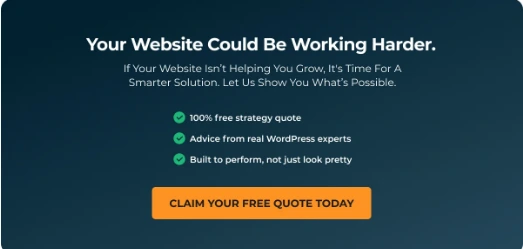
Social Proof CTA [engage]
Leverages credibility to influence clicks (e.g., join 10,000+ marketers).
- Best placement: Near or within testimonials, trust badges, or site mentions.
- Action they urge: Increases engagement and conversions. Builds credibility and force action (join 10,000+ marketers)
Floating CTA [remains visible]
Remains visible as users scroll, ensuring the action is always just one click away.
- Best placement: Fixed to the viewport, either header, footer, or sidebar.
- Action they urge: Keeps the desired action (like “sign up now”) persistently accessible.
Exit-Intent CTA [Abandon visitors]
Popup triggered when users are about to leave (e.g., wait! grab 10% Off).
- Best placement: Triggered when user behavior indicates they’re about to leave.
- Action they urge: Pop-up and slides in as a last-chance offer to stay or convert.

4- Button Color & Hierarchy
Color psychology for CTAs and their position directly affects your sales funnel. A psychological strategy for CTA, based on human nature and users’ behaviour, converts more than the generic or typical approach.
- Green / Blue are good for purchase, checkout, and free trial.
They give trust, safety, and clarity, signals. - Orange / Yellow are perfect for lead capture, service inquiries, and sign-up.
They are good as they give attention-grabbing and friendly vibes. - Red indicates Urgent Offers, discounts, and warnings. But it is not a recommended colour.
Gives cancel/delete/remove, urgency vibes. Good for creating urgency or warning users. - Purple is good for upgrade, premium features, and call-to-action buttons.
Provides luxury, exclusivity, and creativity to users and engages them. - Gray is the recommended colour for secondary actions.
It gives neutral vibes to users.
5- Contact Form
Keep your contact form short and concise. Only ask users what you need most, i.e, username, mail, and message, followed by a personalized CTA. Put easy fields (name, email) first, and optional in the last.
A CRO contact form has the following characteristics.
- Short and sweet/concise.
- Clear & compelling headline
- Mobile-friendly design
- Trust & privacy signals (use a checkbox at the end before the CTA button).
6- Popups & Slide-ins
Use exit-intent, time-delay, or scroll-triggered popups. Keep copy short and CTA strong (e.g, get free guide).
7- Hero Section Optimization
Use a bold headline plus a benefit-driven subheading. Add social proof (logos/testimonials) right under CTA.
8- A/B Testing
Test variations of headlines, button colors, CTA text, and form lengths. Track conversions via GA4 or tools like Hotjar/Optimizely.
9- Trust Builders
Showcase reviews, testimonials, certifications, SSL, and money-back guarantees. Add client logos (not necessary)
10- Thank-You Pages
Always redirect to a thank-you page after form submission. This increases the customer engagement and trust flow. Ultimately, it increases the retention ratio.
Include next steps (download link, webinar invite, or upsell offer).
11- Speed & Mobile Optimization
Ensure landing page loads under 3 seconds. Make sure your landing pages and contact form performs well on mobile devices.
Test all forms, buttons, and popups on mobile for a smooth experience.
CRO Tools
Tools ease you out of guesswork for landing pages and help you laser focus on conversion with data and CRO formulas that decrease your CAC and increase your ROI. Here is the list of the best CRO tools.
These tools help you figure out what’s working and what’s not. Give you visual insights into how visitors interact with your site. Because sometimes, out of guesswork work boring things bring more business.
1- Google Optimize
A/B testing and a personalization tool provided freely by Google. Run free experiments, analyze what gets more business.
- Purpose: Test different versions of web pages (A/B, multivariate, redirect tests) to see which performs best for your goals.
- Features: Worked seamlessly with Google Analytics, letting you use Analytics data to create targeted experiments.
2- Hotjar
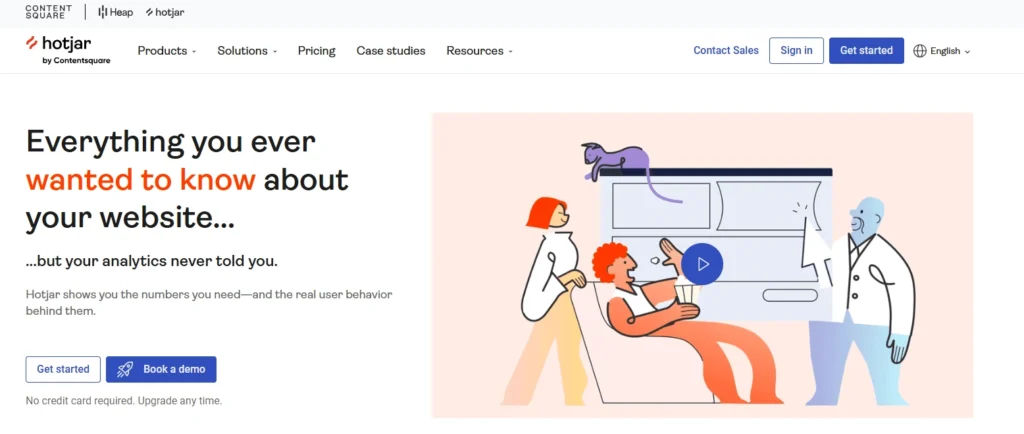
Hotjar is a behavior analytics and feedback tool that helps you understand how visitors interact with your website.
- Purpose: Understand real user behaviour when they interact with your website.
- Features: Heatmaps (visualizing clicks, scrolls, and mouse movement), session recordings, on-site surveys, and feedback widgets.
- Identifies friction points in the user journey, helps optimize UX, and provides qualitative insights to support CRO decisions.
3- Optimizely
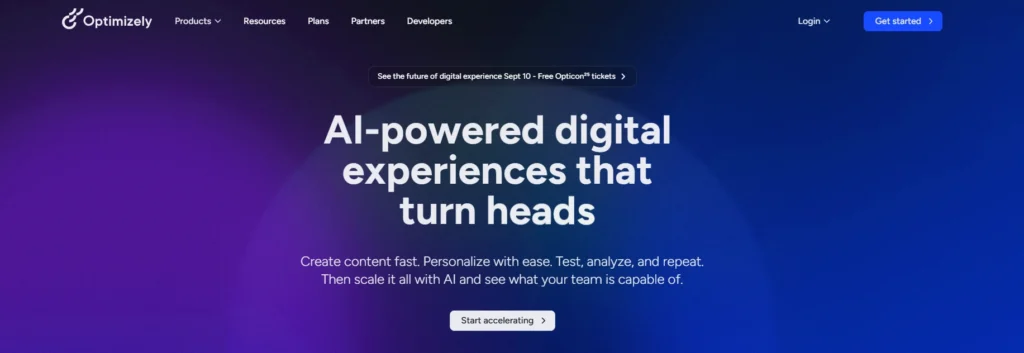
Optimizely is a leading experimentation platform. It helps businesses make data-driven decisions by running controlled experiments before rolling out major changes.
- Purpose: Enables A/B testing, multivariate testing, and feature rollouts to determine which changes improve user engagement and conversion rates.
- Features: AI-powered recommendations, personalization, and server-side as well as client-side testing.
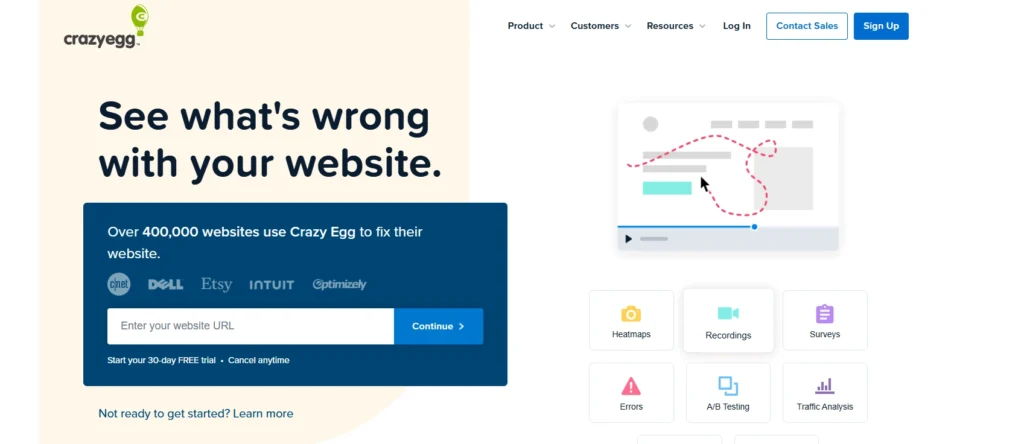
4- Crazy Egg
Crazy Egg is a website optimization tool. Perfect for businesses that want an easy, visual way to understand user behavior without diving deep into raw analytics data.
- Purpose: Tracks user behavior through heatmaps, scrollmaps, and click reports to reveal engagement patterns.
- Features: Session recordings, A/B testing, traffic analysis, and easy-to-use visual reports.
5- VWO
VWO (Visual Website Optimizer) is a conversion optimization tool. Great for marketers and product teams who want an all-in-one CRO toolkit. It helps you test, analyze, and improve every element of your website for maximum results.
- Purpose: Allows you to run A/B, split URL, and multivariate tests to find the highest-performing versions of your pages.
- Features: Heatmaps, session recordings, on-page surveys, funnel analysis, and advanced targeting to personalize user experiences.
Conversion Rate Optimization Best Practices
Follow these conversion rate optimization checklist to skyrocket your sales funnel.
- Start with clear goals: Know exactly which action you want visitors to take.
- Test one variable at a time: This ensures you know exactly what caused a change in results.
- Simplify your pages: Remove unnecessary distractions and focus on a single, strong call-to-action.
- Leverage social proof: Customer reviews, testimonials, and trust badges increase credibility.
- Optimize for mobile: Most users browse on mobile devices; your design and speed must work flawlessly there.
Conlusion
Wrapping up, we have provided you with a list of the best tools and a complete conversion rate optimization checklist. That is essential and effective to perform the best CRO.
Thinking CRO is hard. Well, it’s not the complete truth. You just need the right CRO checklist to perform the best CRO practices.
However, success doesn’t happen overnight. CRO is an ongoing process, not a one-time task. It requires a strong development and maintenance team.
Ready to create or optimize a website to increase conversions?
Request a free website audit today.
Alternatively, you can check out our maintenance plans to keep your optimization cycle running smoothly.
Get in touch today, and turn your website into a lead magnet.
FAQS:
What are conversion rate optimization best practices?
Best practice is to check all the points on the CRO checklist, begin with the primary elements, use the right tools, rely on data, and keep this in a cycle, not a one-time activity.
How to perform a CRO audit?
Begin with analysing traffic data, check heatmaps, review for UX or technical issues, run structured experiments to improve key metrics, and then follow the 11-point checklist for best CRO.
What is the formula of CRO?
CRO (%) = (Number of Conversions ÷ Total Visitors) × 100.
What is conversion rate optimization?
Conversion rate optimization is a marketing strategy that encourages users to perform a desired or targeted action. Like hiring a service, purchasing, downloading a source, i.e PDF, and signing up for a newsletter, etc. It’s a structured approach businesses use to get the maximum value from every visitor they attract.

Popular Guides
View All Guides