
How to Write a Website Hero Section That Converts


Your website hero section has a single goal: to assist visitors rapidly learn more about what you have to offer, who it is for and what they should do next.
A strong hero section consists of a clear title, supporting content, a specific benefit and a strong call to action. The idea is not to explain every aspect of your business. It is to ensure that the appropriate visitor understands the offer and takes the following step.
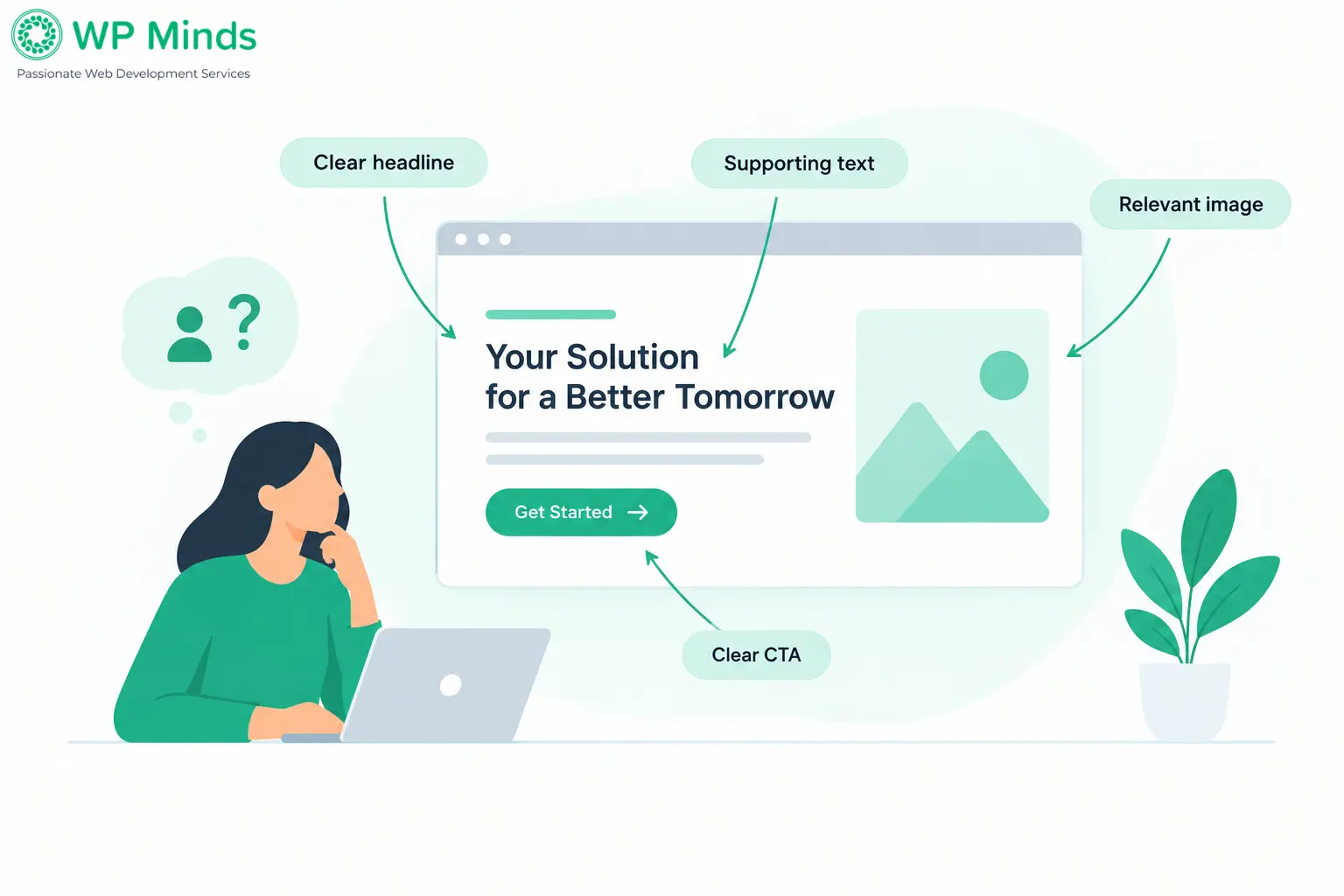
Read More: The Perfect Hero Section Formula + Examples to Inspire You
Start With What Your Visitor Wants to Know
Before writing your hero copy, put your business aside and consider what the visitor needs to understand first.
They may be asking:
- Am I in the right place?
- Does this business have the potential to assist me?
- What does this business offer?
- Does this apply to me?
- What do you think should happen now?
Those are the questions that your hero copy should start answering.
This is especially important for businesses that offer complex services. If visitors need to read several paragraphs before understanding the offer, the hero section is not doing enough work.
Write a Headline That Says Something Useful
Your headline has a major influence on how quickly visitors understand your hero section. Many people make the error of making the headline clever rather than clear.
A good headline will make your offer understandable without explanation.
Consider this question when writing yours:
“Would someone understand how my business can help them from this sentence alone?”
If the response is negative, keep working on it.
Focus the Headline on the Customer’s Problem or Outcome
Your headline does not always need to start with your company name or describe your internal process. Visitors are usually more interested in what you can help them achieve.
This doesn’t mean that all headlines have to make a promise of a dramatic change. The result should be realistic and service specific.
Consider what issue your customer is attempting to resolve. Then put that problem, desired result or relevant benefit into your message.
Use the Subheadline to Add Context
To make the headline understandable, practical and trusted, the subheadline should include enough context.
It can explain:
- What you provide
- Who you help
- How you help
- What makes your offer different
- What the visitor can expect
The second sentence doesn’t repeat the headline. It explains it. That distinction matters.
When the headline tells visitors what you offer, the subhead line should provide more information, not repeat the message.
Make Your Value Proposition Specific
Your value proposition is what makes your visitor take a second look at your solution. It should provide an answer to a very simple question:
What’s the reason to use this instead of something else?
It is not required to make an inflated claim or develop a unique selling proposition. You can make it more targeted by focusing on the audience, problem, process or outcome.
This messaging should be informed by your website content strategy. Don’t write the hero section without finding out who they are you are targeting and what you want them to do.
Match Your Copy to Visitor Intent
Not every visitor has the same level of comprehension or intent. Someone discovering your company for the first time may want a simple explanation of what you offer, which is why homepage content should establish the main message clearly. Someone farther along in the purchasing process may be ready to act.
Your hero should establish the main message and provide a logical next step. The same principle applies to landing page copy, where the messaging should reflect what visitors need to know at that stage. To address more detailed queries, refer to the sections below the hero.
Also Read: How to Create a Website Homepage – A Step by Step Guide
If you’re unsure how to align your messaging with visitor intent, website consulting services can help identify gaps in your website’s messaging and user journey.
Give the Call to Action a Clear Purpose
Your call to action should tell visitors exactly what they can expect when they click.
Avoid vague labels such as “Learn More” or “Submit” when a more specific action is possible.
For example:
- Get a Free Website Audit
- Book a Strategy Call
- View Our Services
- See Our Work
Adjust the CTA to the visitor’s readiness levels. A high-commitment action may not be acceptable for someone who is just learning about your service.
“Hero-section testing can have a measurable impact on conversions. In one series of tests, Carrot reported conversion increases ranging from 25% to 55% after testing different hero-section layouts and content.”
Source: Carrot
A clear CTA is an important part of your overall website conversion strategy, helping guide visitors toward the next step.
Use One Primary CTA
Your hero should have one clear primary action. If you offer a secondary option, make sure it supports the main goal rather than competing with it.
For example:
- Primary: Book a Strategy Cal
- Secondary: View Our Services
The visitor should immediately understand which action you want them to take.
Keep Hero Copy Concise
A hero section shouldn’t be a place to tell all about your business. Because it appears above the fold, visitors should be able to grasp the central idea within a few seconds of reading the text.
“Research from Stanford’s Web Credibility Project found that website credibility is influenced by factors including professional design, usability and clear, useful information. This reinforces why your hero section should make your offer easy to understand and navigate.”
Source: Stanford Web Credibility Research
This isn’t to say that there is a specific word count for each hero section, though. A complicated B2B service might require more of an explanation than a typical consumer product. The key is whether each sentence is needed.
Remove copy that:
- Repeats the headline
- Incorrectly uses industry jargon
- Describes information provided later on this page
- Makes unsupported claims
- Discusses company but doesn’t assist the visitor
If the message in the hero section requires multiple paragraphs to convey, the message may require some additional development.
Use Language Your Customers Actually Use
Good website copywriting can be easier to understand when it uses language that customers already know.
Read customer questions, sales interactions, reviews, emails and support requests and look for language in line with how your audience’s problems are described.
Copy with familiar language can appear more relevant and understandable.
For example:
Instead of: “Transform Your Digital Presence”
Try: “Build a Faster WordPress Website That Converts More Visitors”
The second version tells visitors what the business does and gives them a clearer reason to continue.
Your hero section should also work with your overall website structure and user experience, which is where WordPress design and development can make a difference.
Test Your Hero Copy From a Visitor’s Perspective
After the copy has been written, don’t assess it solely as the business owner. Have someone unfamiliar with your business read it.
Then ask:
- What is the business that this is?
- Who do you think it helps?
- What do you think will happen if you press the button?
If they are not the same as what you are attempting to say, the copy should be clarified.
A Simple Editing Checklist
Check each component of your hero section before publishing.
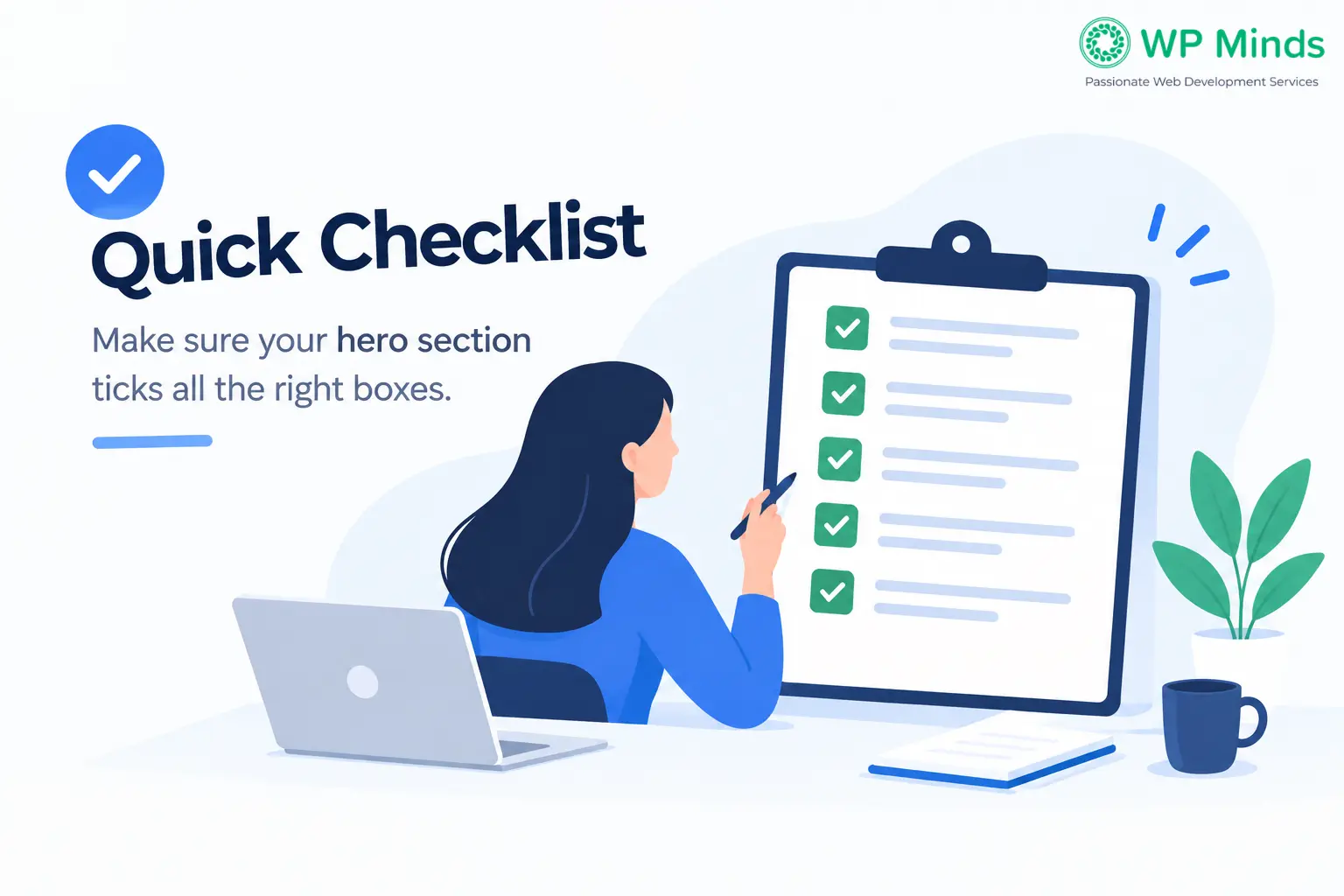
- Headline: Is it clear what you offer or what problem you solve?
- Sub-headline: Does it add useful context instead of repeating the headline?
- Value Proposition: Is there a clear reason for the visitor to care?
- CTA: Is the next step obvious?
- Language: Does it sound like the language your target customer actually uses?
- Clarity: Could someone unfamiliar with your business understand the message?
If any of the answers are no, make the changes to that section before adding additional copy.
Conclusion
An effective website hero section doesn’t require complex language or an extended sales message. It requires a distinct message, a pertinent value proposition, helpful supporting text and a CTA that provides visitors a clear next action.
Begin with what your audience needs, describe your offer clearly, delete extraneous language and ensure the hero integrates with the rest of your website’s content and conversion path.
If your homepage receives traffic but not enough queries, WP Minds can assist you in identifying issues with your messaging, strategy and conversion path.
Looking to enhance the message on your website?
Call a strategy session with us to strategize with them on your website and what can be done to make the site clearer and more effective.
More Related Blogs:
- How to Create High-Converting Landing Pages
- Landing Page Design Best Practices That Actually Convert
- 50 Powerful Call-to-Action (CTA) Phrases for Your Coaching Website
FAQs (Frequently Asked Questions)
What should I write in my website hero section?
Begin by stating what you offer and who it is for. Include a brief supporting statement that describes the benefits or results, then a call to action that gives the visitor a clear next step.
How do I write a hero headline that clearly explains what I offer?
Focus on the customer’s problem, need or desired outcome. Steer clear of buzzwords and jargon. The headline should be easily understood by anyone who does not know your business.
How long should the hero section copy be?
There is no standard word count. Be concise but include sufficient information for visitors to know what is being offered and what they need to do. Take out any repetition or information that could be covered elsewhere on the page.
Should my hero section focus on my business or my customer?
It should focus mainly on the needs of your customers. Visitors want to know how you can help them, so begin with the problem you solve, the audience you serve or the result you deliver, instead of talking about your company.
What should my hero section CTA say?
Use a clear call to action. Examples: Schedule a Consultation, Request a Quote, Explore Services or Get Started. Use language that matches what the visitor is ready to do at this stage of their journey.

Popular Guides
View All Guides