

Law Firm Website Design Tips to Attract More Clients


Looking for the best law firm website design tips to attract more clients and grow your legal practice?
The problem many law firms face is not having a website, but having a website design that fails to interact with users effectively.
Legal clients are often in stressful situations. Your website design directly affects user engagement and conversion rates. Design matters for legal practice websites, as your landing page must feel stable and reliable, not experimental.
In this article, we explain the most effective law firm website design tips, 7 design principles to help attorneys attract clients, build trust, and improve conversions in 2026.
Common Problems with Law Firm Website Design
Most law firms invest a good amount of money in developing their website, and face low rankings and low conversion rates.
This is because their website fails to interact with the user and is ultimately unable to convert the user into a client. The most common mistakes noted are
- Overloaded homepages with too much information
- Ignoring mobile responsiveness
- The website loading time is slow
- Unclear messaging and calls-to-action
- Generic stock imagery and inconsistent branding
To stand out in a saturated legal market, one way is to have an attractive, user-friendly and feature-rich law firm website.
What Makes a Law Firm Website Design Effective
An effective law firm website should serve three main purposes
- Educate visitors about your legal services: Provide clear explanations of practice areas, processes, and outcomes
- Build trust and authority: Include attorney bios, professional certifications, and client testimonials
- Convert visitors into leads: Easy navigation, visible CTAs, and mobile optimisation encourage prospective clients to take action
For an online legal presence, design matters first, content second, and content marketing third. Everything else aligns with these three pillars.
7 Design Principles Behind High-Converting Law Firm Websites
The basic principle of law firm website design is trust, clarity, and conversion.
In simple words you website and especially your home page should immediately build users’ trust, convey what and whom you deliver and convert through a conversion-focused structure.
Below are the foundational design principles specific to law firm websites, and points on how to achieve them.
1- Build Website Structure with trust-first design
First, you need to wireframe your website structure. Plan necessary pages, i.e. Homepage, testimonials, blogs, contact and about us. All with a trust-first design.
Law firm clients are often in stressful situations. So, your design must instantly convey
- Professionalism
- Authority
- Confidentiality
- Experience
How to achieve this
- Use Professional attorney headshots on the home and about page (not stock-heavy pages)
- Mention clear credentials and bar memberships
- Highlight the client testimonials and case results on the homepage and testimonial page
- Always use a clean and structured layout
For example, A personal injury website should show a testimonial above the fold.
2. Clarity Over Creativity
Unlike creative industries, law firm website design should prioritise clarity over decorative visuals.
What to avoid
- Over-animated sections
- Trendy but confusing layouts
- Overly decorative fonts
3. Authority-Driven Visual Hierarchy
Your design should guide users to right direction. Key questions to answer on every page are
- Who do you help?
- What services do you offer?
- Why are you qualified?
- How to contact you?
How to achieve this
- Use strong headlines and subheadings
- Highlight practice areas
- Place CTAs in the header, middle, and footer
- Use the F-method for best results
The hierarchy should naturally lead toward conversion.
4. Design It Around Your Audience
The basic design principle is design for your audience. In our case studies, the attorney websites that are built around the clients generate more leads.
5. Professional Visual Language
Colour psychology matters in legal website design. Below are the common effective choices. However, you can choose your branding colours as well
- Navy blue (trust, authority)
- Grey (professionalism)
- White (clarity)
Also, make sure you use clean, highly readable typography. Most commonly used fonts are Montserrat, Inter, and Roboto.
6. Local & SEO-Integrated Design
Law firm website design must support visibility.
This means
- Location pages are structured clearly
- Schema markup is set up for each page
- Pages load fast
- The website must work smoothly on mobile screens
Design and SEO must work together.
7. Accessibility & Compliance
Legal websites should comply with accessibility standards
- Proper contrast ratios
- Clear readable fonts
- Keyboard-friendly navigation
- Alt text for images
This reinforces professionalism and reduces legal risk.
Key Elements of a Law Firm Website Design
Websites for legal practices are designed differently. Before designing a law firm website, one must know the essentials of a legal website.
- Core purpose of a legal website
- Balancing information, branding, and conversion
- Know the difference between generic sites and high-performing law firm websites
The table below outlines the key design elements every high-converting family law website should include and why each one matters for turning visitors into confident clients.
| Element | Why It Matters |
|---|---|
| Clear CTAs | Encourages immediate action (“Call Now”, “Schedule Consultation”) |
| Testimonials & Reviews | Build trust instantly |
| Local Map Integration | Improves local SEO visibility |
| Professional Design | Warm, empathetic visuals reduce visitor anxiety |
| Attorney Bios & Photos | Makes the site usable for all |
| Accessibility | Makes site usable for all |
| Humanises your practice | Helps target specific law search queries |
| Specialised Service Pages | Increases conversions and SEO ranking |
Using proven law firm website templates and professional visuals on your legal services website increases client conversion rates.
How to Design Your Law Firm Website
The seven design principles above serve as the foundation of any high-converting attorney website. Below is a step-by-step law firm website design guide
- Prioritize Visual Hierarchy
Break content into headings, subheadings, and bullet points
Highlight important information above the fold
Strategically place CTAs throughout pages - Optimise for Mobile and Speed
Ensure buttons and links are easily clickable
Compress images and videos for faster load times using tinypng
Test on multiple devices - Use professional and Licensed Images
Include attorney headshots and office photos instead of generic stock images. Maintain consistency in lighting, style, and quality
- Make Contact Information visible
Display phone number and CTA buttons prominently. Embed a concise contact form to capture leads
Furthermore, provide multiple methods to contact the firm i.e mail, contact, whatsapp etc - Integrate SEO Best Practices
After all the design efforts. Discovery and ranking of the website is what brings all the business, so it’s necessary to follow the best SEO practices even in the design phase of the website. For the best seo practice
Embed the local map in the header or footer of the website
Display the contact details clearly
Make the law firm website header clear
Follow the content best practices
Optimise meta titles, descriptions, headings, and URLs
Read the website development guide for a complete understanding.
5 Best Law Firm Website Design Examples
These are the best law firm website design examples in 2026
- Stewart Miller Simmons Trial Attorneys
- Augulis Law Firm
- Dolman Law Group
- Johnson Legal Advisors
- Anderson & Co. Attorneys
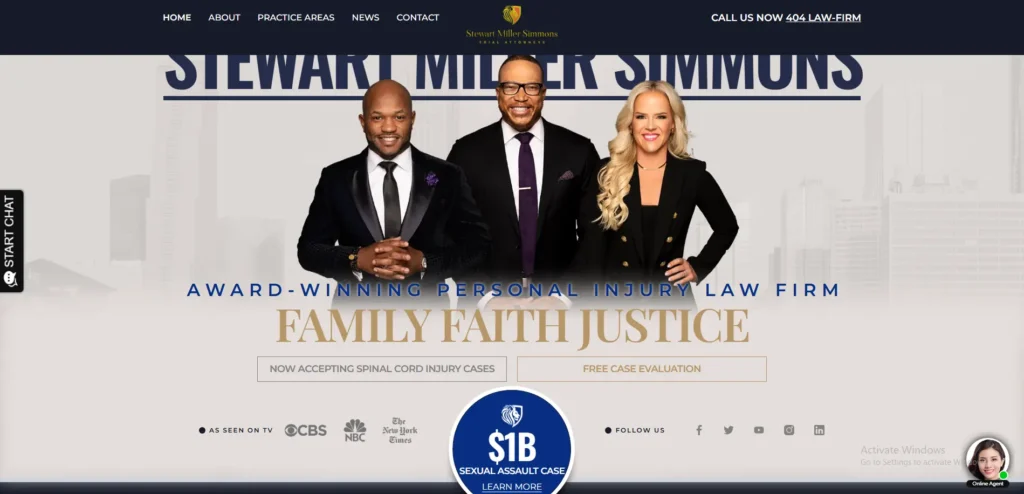
1. Stewart Miller Simmons Trial Attorneys
This site is a top example to reference for law firm website design tips, demonstrating how to combine professionalism, clarity, and conversion-focused design in a single, user-friendly homepage
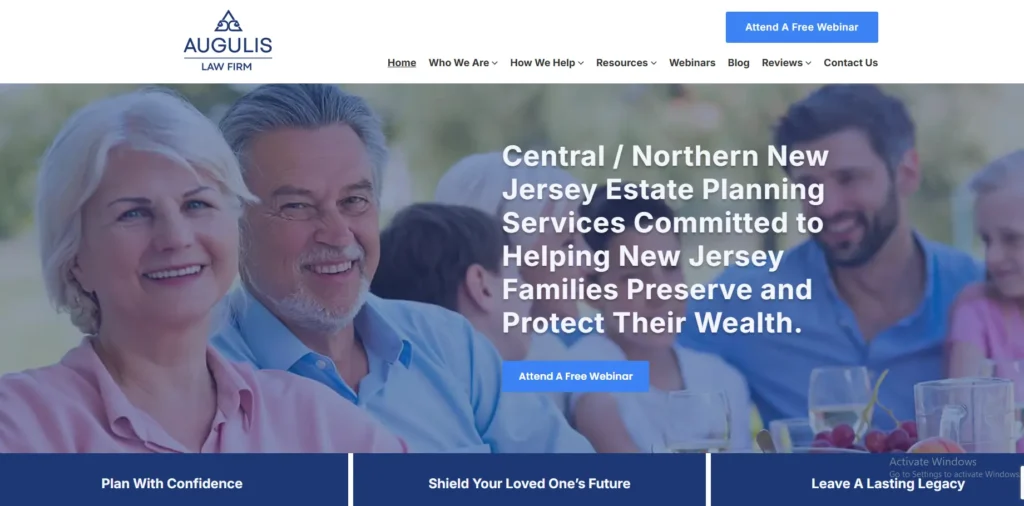
2. Augulis Law Firm
The website has a mobile-first, responsive design with sticky contact buttons. Prioritises user experience and seamless lead generation
3. Dolman Law Group
The Dolamns law website has a strong attorney website design that prioritises trust-first layouts, while lawyer web design ensures clarity and smooth navigation

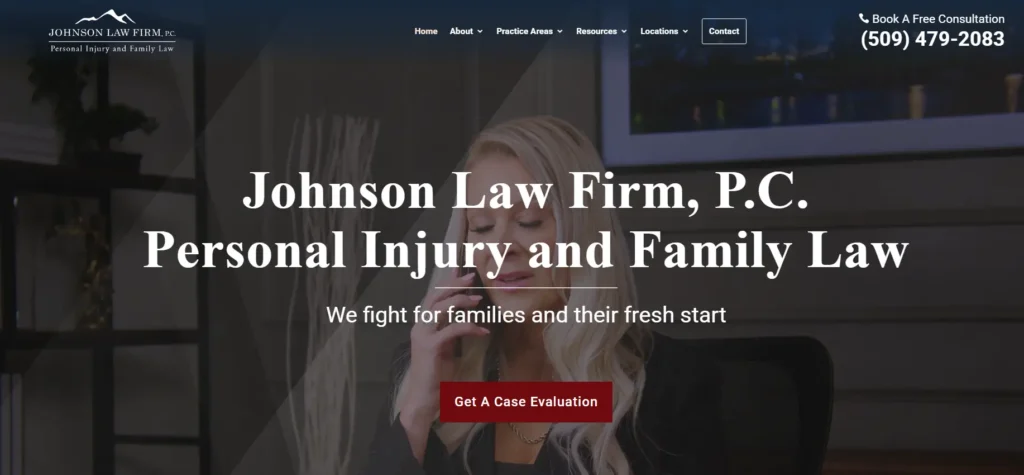
4. Johnson Law Firm
Professional visual hierarchy with highlighted CTAs and structured content. Optimised to drive conversions and build authority
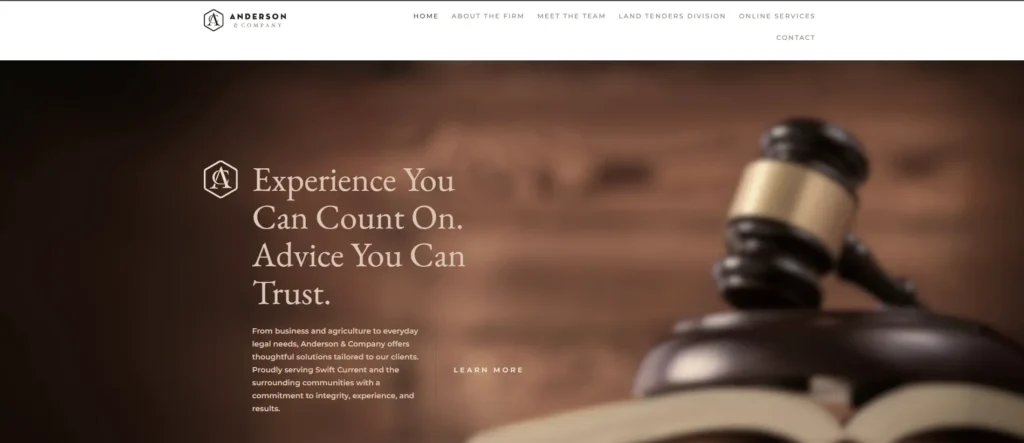
5. Anderson & Co. Attorneys
The Anderso legal marketing website has an accessible design with clear service pages. Focused on capturing leads effectively while maintaining a polished, professional look
Generic Website vs Law Firm Website Design
Law firm websites require specialised design and strategy for trust, SEO, and lead generation.
| Feature | Generic Website | Law Firm Website |
|---|---|---|
| Trust Signals | Limited | Strong |
| Legal Compliance | Basic | High |
| Conversion Focus | Low | High |
| Local SEO | Weak | Optimized |
| Client Intake | Simple | Advanced |
Conclusion
Above are the detailed law firm website design tips to develop a website that converts.
Remember, the goal is to make a strong first impression within seconds, clearly communicate your services, and guide potential clients toward taking action.
If your website is not performing well and the above-mentioned problems sound familiar, our custom law firm website development services can help you design a site that actually converts.
Reach out to us, book a free strategy call today.

Popular Guides
View All Guides